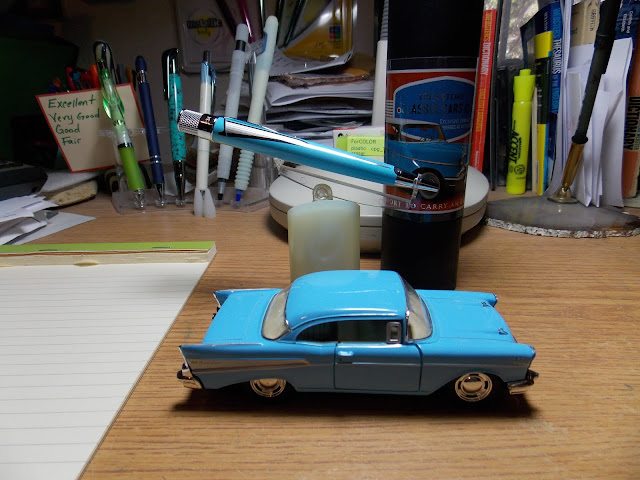
Thinking about your first Retro 51 Tornado, or maybe adding another to your collection? You’ve come to the right place. I’ve been using these pens daily for well over a decade, through dozens of models, and I’ve learned a thing or two about what makes them tick—and what to avoid. Let me save you some time and money.
Why the Tornado is My Daily Driver (And When It Isn’t)
Look, I’m going to tell you something controversial right off the bat: the standard Retro 51 Tornado is, hands down, the best everyday rollerball you can buy for under $50. Yes, I said it. It’s not just hype; it’s a fact born from years of carrying one in my pocket, bag, and hand. The build quality, the classic twist mechanism, and the satisfying weight are unmatched in its price bracket. I’ve seen countless pens come and go, but the Tornado has remained a constant. Its reliable performance and simple elegance make it an easy choice for work, notes, and everything in between.
The pen feels substantial. It’s not a lightweight plastic toy. This heft translates into a writing experience that feels controlled and deliberate. The twist mechanism for extending and retracting the refill is incredibly smooth. It’s one of those tactile pleasures you appreciate every time you use it.
The Tornado’s Core Strengths: Weight, Balance, and Durability
The standard Tornado weighs around 1.1 ounces (31 grams) and measures 5 inches (127 mm) capped. This combination hits a sweet spot. It’s heavy enough to feel solid, but light enough not to cause fatigue during long writing sessions. The balance is usually excellent, with the weight distributed evenly, preventing it from feeling top-heavy or awkward. Most models feature a brass body, which is a major contributor to its durability. I’ve dropped mine more times than I care to admit, and while they might pick up a ding or two, they keep writing.
For example, my Stealth model, which runs around $35-$45, has seen years of abuse. The black coating has worn in places, revealing the brass underneath, but the mechanism works flawlessly. Compare that to some plastic-bodied pens that crack or break after a single fall. You’re investing in something that lasts, not something you’ll replace in six months.
When to Skip the Tornado: Specific Use Cases
Despite my love for the Tornado, it’s not for everyone, nor is it perfect for every situation. If you need a pen that excels at quick, disposable note-taking in a harsh environment, the Tornado might be overkill. For those times, a cheap Bic or a Pilot G2 is a better fit. You don’t want to lose a $30+ pen in a construction site or drop it into a vat of chemicals.
Also, if you prefer an extremely fine line, say 0.3mm or 0.4mm, the stock Schmidt 5888 refill (typically a 0.7mm) might feel too broad. While you can swap refills, the pen itself is designed around that standard size. If precision artwork or tiny script is your primary goal, you might find other pens with dedicated extra-fine options more suitable. It’s a workhorse, not a scalpel.
Decoding Retro 51 Finishes: What Actually Lasts
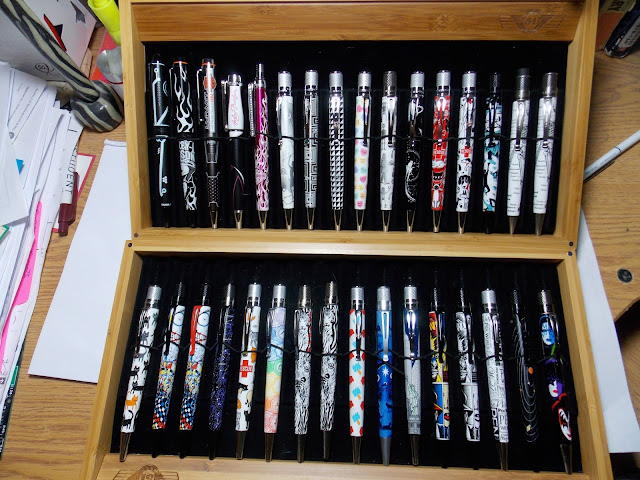
Choosing a Retro 51 often comes down to the finish. There are hundreds, ranging from simple solid colors to intricate printed designs. But not all finishes are created equal when it comes to durability. This is where I’ve seen people make mistakes, buying beautiful pens that look rough after a few months of real-world use.
Lacquer vs. Acid-Etched vs. Printed Designs
I’ve owned a variety. My experience dictates a clear hierarchy of longevity. The most robust finishes tend to be solid, baked-on lacquer or matte finishes. These are often seen on models like the Lincoln or the Dr. Gray. They might chip if dropped hard, but they generally resist everyday scratches and wear remarkably well. My Lincoln model, a simple burgundy lacquer, looks almost new after years of light use.
Acid-etched or textured finishes, like those on the Stealth or certain Vintage Metals, are also incredibly durable. The texture itself helps hide minor abrasions, and the process often means the design is integral to the metal, not just a surface layer. The Stealth’s matte black finish, for instance, is tough as nails, though the brass underneath will show through if scratched deeply. Printed designs, while visually stunning, are often the least durable. These usually involve a graphic printed onto the brass barrel, then coated with a clear lacquer. The clear coat can scratch, and in some cases, the print underneath can wear away, especially on edges or areas of high friction. I’ve seen beautiful limited editions with intricate art start to look faded or patchy within a year if they’re carried without a pen case. If you’re buying a printed design, plan to treat it gently or enjoy the distressed look.
The Brass Body Advantage
Nearly all Retro 51 Tornado pens feature a solid brass body. This is their unsung hero. Brass provides the ideal weight, a reassuring coolness to the touch, and an incredible foundation for any finish. Even if a finish wears off entirely, you’re left with a brass pen that will develop a unique patina over time. Some special editions are even designed to be raw brass, intended to age gracefully. This underlying material quality is what gives the Tornado its inherent toughness, separating it from cheaper pens made of aluminum or plastic that can bend, dent easily, or shatter. Understanding the brass core helps you appreciate the true value beyond the surface aesthetics. It’s why even a well-worn Tornado still feels like a quality instrument.
Refills: The Only Ones I Bother With
The stock refill in a Retro 51 Tornado is typically a Schmidt 5888 rollerball. It’s a decent refill, reliable and smooth enough for most people. But ‘decent’ isn’t ‘best.’ After years of trial and error, I’ve narrowed it down to two refills that consistently outperform the stock offering, offering a better writing experience without breaking the bank.
My Top Rollerball Picks
Hands down, my go-to rollerball refill is the Schmidt 5888 in fine point (0.6mm) or, for a bolder line, the broad (1.0mm). The standard 0.7mm is fine, but the 0.6mm gives you a touch more control without sacrificing smoothness, and the 1.0mm delivers a wonderfully juicy, expressive line. They cost around $3-$5 each, depending on where you buy them, and they last a good while. The ink flow is consistent, and they dry quickly enough for most uses. I avoid gel refills in rollerball bodies entirely; they have a tendency to skip and blob in my experience. The Schmidt 5888 is a proven, reliable workhorse, and the different tip sizes genuinely make a difference.
Converting to Ballpoint: Worth the Effort?
Absolutely, if you need archival ink or prefer the longer life of a ballpoint. The beauty of the Tornado is its versatility. It accepts a standard Parker-style G2 ballpoint refill with a simple spring swap. My recommendation here is the Schmidt EasyFlow 9000. This hybrid ballpoint ink is incredibly smooth, almost like a rollerball, but with the permanence and longevity of a traditional ballpoint. It’s a revelation. This refill costs about $5-$7 and transforms the Tornado into an entirely different, yet equally excellent, writing tool. It’s my go-to for signing important documents or when I know I’ll be writing on less-than-ideal paper. Don’t bother with cheap Parker-style refills; spend a few extra bucks for the EasyFlow 9000. You won’t regret it.
Retro 51 vs. The Contenders: Where It Stands
When people ask about alternatives, I usually tell them not to bother. Seriously. For the price, nothing quite matches the whole package of a Retro 51 Tornado. But if you insist on looking elsewhere, here’s how it stacks up against some common choices:
| Feature | Retro 51 Tornado | LAMY Safari Rollerball | Pilot G2 Limited |
|---|---|---|---|
| Price Range | $30 – $55 | $25 – $35 | $10 – $15 |
| Body Material | Solid Brass (various finishes) | ABS Plastic | Metal barrel, plastic grip |
| Weight | ~31g (1.1 oz) | ~17g (0.6 oz) | ~21g (0.75 oz) |
| Refill Type | Schmidt 5888 (Parker-style compatible) | LAMY M63 | Pilot G2 gel |
| Durability | Excellent, heavy-duty brass | Good, but plastic can scratch/break | Decent, metal barrel helps |
| Refill Cost (Approx.) | $3-$7 | $5-$7 | $2-$4 |
My verdict is clear. The Retro 51 Tornado offers a significantly more premium feel and better long-term durability than its closest competitors, often for only a few dollars more than a LAMY Safari Rollerball. The Safari is a fine pen, especially for students, but it’s plastic. It feels like plastic. The Pilot G2 Limited, while a step up from the standard G2, still feels like a souped-up disposable. You don’t get the same satisfying heft or build quality that comes from a solid brass body. For a truly durable, reliable pen that feels good in the hand, the Tornado remains the king of its class.
Tornado vs. LAMY Safari Rollerball
The LAMY Safari is a design icon, no doubt. Its triangular grip is loved by many. But it’s a lightweight ABS plastic pen. It feels like a tool, not an heirloom. The Safari rollerball uses LAMY’s proprietary M63 refill, which is good, but doesn’t have the same aftermarket versatility as the Schmidt 5888. A Safari might cost you $25, but it won’t feel as substantial as a Retro 51, which often starts around $30-$35 for a basic model.
Tornado vs. Pilot G2 Limited
The Pilot G2 Limited is a common office upgrade. It takes the ubiquitous Pilot G2 gel refill, which is a fantastic refill in its own right. The pen itself has a metal barrel, giving it some weight, but the grip section is still plastic and feels a bit cheap. It’s a good choice for someone who loves the G2 refill and wants a slightly nicer housing, but it lacks the distinct character and solid construction of the Tornado. You’re still essentially writing with a glorified disposable pen, albeit a comfortable one.
The “Grail” Hunts and Limited Editions: A Warning
Let’s talk about the specific Retro 51 #57 and similar limited editions. These can be beautiful, unique, and highly collectible. However, chasing a specific, long-discontinued model is a fool’s errand for a daily writer. You’ll pay exorbitant prices on the secondary market—often $100 or more for a pen that originally sold for $45—and then you’ll be afraid to use it. Buy one to use, not to collect.
So, is chasing that specific Retro 51 #57, or any Tornado for that matter, worth it? Absolutely. But only if you know what you’re getting into, prioritize the right features, and aren’t afraid to swap out that stock refill. Pick a finish you love, upgrade the ink, and you’ll have a pen that lasts years. Don’t waste money on something shiny that won’t hold up. Go for the workhorse.