Most pencils are garbage. The wood splinters. The lead snaps. The eraser smears everything into a gray mess. Staedtler doesn’t make those. But they do make about twenty different models, and buying the wrong one is a common mistake. Here’s the shortcut: for everyday writing and exams, buy the Staedtler Noris HB. For serious drawing or drafting, buy the Staedtler Mars Lumograph in a range of hardnesses. Everything else is a compromise. This guide explains why.
What Makes a Pencil Actually Good? (The Physics of Graphite)
A pencil does one thing: deposits graphite onto paper. The quality of that deposit depends on three things. The graphite mixture itself — Staedtler uses a blend of clay and graphite that they refine to specific particle sizes. Finer particles mean smoother writing with fewer scratchy spots. The bonding process — how the graphite is fired in a kiln determines hardness consistency. A 2H from Staedtler will write exactly like another 2H from the same box, batch after batch. Cheap pencils vary wildly within the same pack.
Then there’s the wood. Staedtler uses California cedar for most models. It sharpens cleanly without splintering. Cheap pencils use basswood or worse, which chips and leaves rough edges. The glue that bonds the two halves of the pencil matters too. Weak glue means the wood splits when you sharpen it. Staedtler’s glue holds.
You’re not paying for a stick of wood and some carbon. You’re paying for consistency. A Staedtler pencil writes the same from the first word to the last stub. That’s the whole point.
Staedtler Pencil Lineup: Which Model for Which Job?
Staedtler makes five main pencil lines. Each one targets a different use case. Picking the wrong one means either overpaying for features you don’t need or getting a pencil that doesn’t perform for your task.
Staedtler Noris ($0.50–$0.70 per pencil)
The Noris is the classic yellow-and-black school pencil. It’s the best value in the lineup. The graphite is smooth for a grade HB, the eraser actually works (most pencil erasers are useless), and the wood sharpens cleanly. It’s designed for writing, not drawing. The lead is slightly softer than a standard HB, which means darker lines with less pressure. Good for exams, note-taking, and anyone who writes for hours. The main downside: the black paint chips off if you chew on it. Don’t chew on your pencil.
Staedtler Mars Lumograph ($0.80–$1.20 per pencil)
This is the gold standard for artists, architects, and engineers. The Mars Lumograph comes in 20 hardness grades, from 8B (very soft, very dark) to 6H (very hard, very light). The graphite is ground finer than the Noris, which means it lays down a more consistent line with no graininess. It’s also more break-resistant — you can sharpen it to a long, fine point without snapping the tip. If you’re shading, cross-hatching, or doing technical drawings, this is the pencil. Don’t buy it for general writing — you’re paying for precision you won’t use.
Staedtler Tradition ($0.40–$0.60 per pencil)
The Tradition is the budget option. It’s a solid pencil — better than anything you’ll find at a dollar store — but it’s noticeably scratchier than the Noris. The wood quality is lower, and the eraser is smaller. It’s fine for kids who lose pencils constantly or for bulk classroom purchases. But if you’re buying for yourself, spend the extra twenty cents on the Noris. The difference is real.
Staedtler Wopex ($0.60–$0.80 per pencil)
The Wopex is weird. It’s made from a composite of wood fibers and recycled plastic instead of solid wood. The result is a pencil that feels slightly rubbery and doesn’t need sharpening as often — the material wears down evenly so the tip stays more consistent. Some people love it. I find it feels odd in the hand, like writing with a chopstick. It’s also harder to erase cleanly because the composite leaves more residue. Skip it unless you’re specifically looking for a wood-free option for environmental reasons.
Staedtler Mars Micro (Mechanical Pencils)
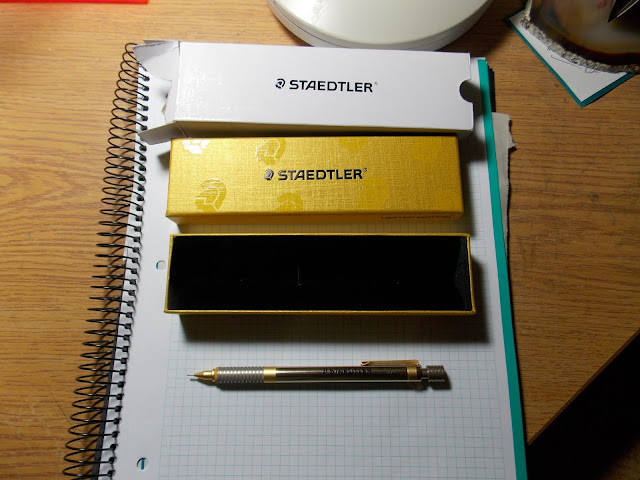
If you prefer mechanical pencils, the Mars Micro line is the equivalent of the Lumograph. The 0.5mm and 0.7mm sizes are the most useful. The grip is textured metal, which stops your fingers from slipping. The lead advance mechanism is reliable — no jamming. It’s not cheap ($8–$12), but it will last for years. The main tradeoff: you lose the ability to vary line width by rotating the pencil, which matters for drawing.
The Hardness Scale: Why HB Isn’t Always Right
Most people buy HB pencils because that’s what they used in school. HB is the middle of the scale — not too hard, not too soft. But it’s rarely the optimal choice for a specific task.
| Grade | Line Darkness | Best Use |
|---|---|---|
| 2B | Dark, slightly smudgy | Writing for long periods (less hand fatigue), expressive drawing |
| HB | Medium, clean | Standard writing, scantron tests, general office work |
| 2H | Light, crisp | Technical drawing, light sketching, people who press hard |
| 4H | Very light, hard | Architectural drafting, fine detail lines |
| 6B | Very dark, soft | Shading, broad strokes, artistic sketching |
Here’s the mistake: people who press hard when they write should NOT use HB. They should use 2H or 3H. Softer leads (B grades) will snap under heavy pressure. Harder leads (H grades) hold up better. If you write lightly, go the other way — use 2B for darker lines without pressing harder. Match the hardness to your hand pressure, not the package label.
Common Mistakes People Make Buying Staedtler Pencils
Three mistakes come up over and over. Avoid them and you’ll save money and frustration.
Mistake 1: Buying the cheapest Staedtler model for art. The Staedtler Tradition is fine for a grocery list. It’s not fine for shading a portrait. The graphite has visible grain — you’ll see tiny dark specks in your shading. The wood splinters when you sharpen to a long point. Spend the extra money on the Mars Lumograph. It’s $0.40 more per pencil, and that difference is the difference between a drawing that looks professional and one that looks like a school project.
Mistake 2: Buying a full set of 12 hardness grades. Unless you’re a professional illustrator or architect, you’ll use maybe three grades: 2B, HB, and 2H. The 4B and 6B will sit in the box untouched. The 4H and 6H are so hard they leave grooves in the paper. Buy individual pencils in the grades you actually need. A set of 12 Mars Lumograph pencils costs about $12. Three individual pencils cost $3. Don’t waste the money.
Mistake 3: Ignoring the eraser. The eraser on a Staedtler Noris is surprisingly good. It’s a white vinyl eraser that lifts graphite without smearing. The eraser on the Mars Lumograph is smaller and less effective — it’s meant for touch-ups, not heavy erasing. If you’re buying the Lumograph, also buy a separate eraser. The Staedtler Mars Plastic Eraser ($1.50) is the right companion. It erases cleanly without damaging the paper surface.
When You Should NOT Buy a Staedtler Pencil
Staedtler makes excellent pencils. But they’re not the best choice for every situation. Here’s when to buy something else.
For calligraphy or lettering. Staedtler pencils are too hard. You want a softer lead that lets you vary line width with pressure. Try a Faber-Castell 9000 in 2B or 4B. The graphite is creamier, and the wood is slightly softer, which makes it easier to get thick and thin lines.
For colored pencil work. Staedtler makes colored pencils (the Staedtler Ergosoft line), but they’re not competitive with dedicated brands. Prismacolor Premier colored pencils are much softer and more pigmented. Faber-Castell Polychromos are harder but more precise. If you’re doing serious colored pencil art, skip Staedtler.
For left-handed writers. Left-handed people drag their hand across what they just wrote. Soft graphite (B grades) smears badly. A left-handed writer should use 2H or 3H leads, which deposit less graphite and smear less. But any pencil will smear to some degree. The real solution is a quick-drying pen or a pencil with a special coating. The Staedtler Noris left-handed pencil exists, but it’s basically a standard Noris with a different paint job. Don’t pay extra for it.
For standardized tests. Scantron machines read the darkness of the mark. An HB pencil is fine. A 2B is better — it leaves a darker mark that’s less likely to be misread. But any pencil that makes a dark mark works. The Staedtler Noris HB is a safe bet. Don’t overthink it.
How to Spot a Fake Staedtler Pencil
Counterfeit Staedtler pencils are common on Amazon and eBay. They look similar but perform terribly. The lead snaps constantly. The wood splinters. The paint comes off on your hands. Here’s how to spot them.
Check the print quality. Real Staedtler pencils have crisp, even printing. The word “Staedtler” is embossed slightly into the paint. Fakes have blurry print that rubs off easily. Hold the pencil at an angle to the light — the embossing should be visible.
Check the eraser ferrule. The metal band that holds the eraser should be seamless and tightly crimped. Fakes often have a visible seam line and the eraser falls out after a few uses. The eraser itself should be white, not pink or gray. Real Staedtler erasers are vinyl, not rubber. They don’t smell like a pencil eraser from childhood — they’re odorless.
Check the wood color. California cedar is a light reddish-brown. If the wood after sharpening looks pale yellow or white, it’s not cedar. That means cheaper wood that will splinter and dull your sharpener faster. Return it.
Buy from authorized dealers. Staedtler’s website lists authorized retailers. JetPens, Blick Art Materials, and Amazon (sold by Staedtler directly) are safe. Third-party sellers on Amazon with names like “BestDeal4U” are not safe. Pay the extra dollar for the guarantee.
What’s Coming Next for Pencils (and Why Staedtler Is Ready)
Pencils aren’t going away. Digital note-taking is growing, but physical writing is still faster for many people. The trend is toward sustainable materials. Staedtler’s Wopex line is an early attempt at a wood-free pencil. The next step will probably be pencils made from recycled plastics or agricultural waste. Staedtler is investing in that. They’re also improving the eraser technology — the Mars Plastic Eraser is already one of the best on the market, and future pencils will likely integrate that same material into the cap.
The other trend is customization. Artists and professionals want specific hardnesses, specific wood types, specific paint finishes. Staedtler already offers the Mars Lumograph in 20 grades. Expect them to expand the Noris line with more options for writers — maybe a softer HB for people who write lightly, or a harder HB for people who press down. The basic technology hasn’t changed in a century. But the refinement of that technology keeps getting better.
A Staedtler pencil is a tool that does one thing perfectly. That’s rare in any category. If you buy the right model for your job, you won’t need another pencil for a long time.