Do you ever buy a beautiful new journal, full of good intentions, only for it to sit half-empty on your shelf months later? You’re not alone. Many aspiring journalers struggle to maintain a consistent habit. The problem often isn’t a lack of discipline. It’s a mismatch between your needs, your journaling style, and the tool you choose. A journal isn’t just paper; it’s a personal space, a silent confidante, and a tool for growth. But if that tool feels wrong, the habit quickly fades, leaving behind a sense of unfulfilled potential.
Why Journaling Attempts Fizzle (And How to Light the Spark)
Starting a daily journaling practice feels simple. Grab a pen, grab a notebook, start writing. Yet, for many, the initial enthusiasm wanes. The blank page can feel intimidating, presenting a vast, empty canvas that demands profound thoughts. The time commitment seems overwhelming, especially when daily life pulls in a thousand directions. Or perhaps the journal itself isn’t quite right—too small, too flimsy, or incompatible with your favorite pen. Understanding these common pitfalls is the first step toward building a sustainable habit that truly sticks, turning a fleeting interest into a lasting ritual.
Common Roadblocks to Consistency
One major hurdle is the belief that journaling requires profound, philosophical insights every single day. This pressure often leads to avoidance. If you expect to write pages of deep self-reflection daily, you’re setting yourself up for failure. Life gets busy. Some days, your deepest thought might be, “Need more coffee.” And that’s perfectly okay. The expectation of perfection paralyzes action. Another common issue is comparing your practice to others. Social media often showcases beautifully curated journals, full of intricate drawings and perfectly penned thoughts. This can make a simple, messy daily entry feel inadequate, leading to self-consciousness and giving up. It’s crucial to remember that your journal is for you, not for an audience.
The sheer physical act of writing can also be a barrier. If your pen drags on the paper, if the ink bleeds through, or if the notebook feels cumbersome to carry, these small frictions accumulate. They make the process less enjoyable and more of a chore. Think about the sensory experience: the smell of the paper, the feel of the cover, the satisfying scratch or smooth glide of your pen on the page. These subtle elements play a larger role than most people realize in making a journaling practice inviting or off-putting. A poor physical experience directly translates to a reduced desire to engage.
Finally, a lack of clear purpose can derail efforts. Why are you journaling? Is it for stress relief, creative expression, goal tracking, emotional processing, or self-discovery? Without a defined “why,” the activity can feel directionless, making it easy to drop when other demands arise. Many people dive into journaling without considering what they hope to gain, making it a task rather than a valuable ritual. Clarifying your intention provides the intrinsic motivation needed to keep going even when inspiration is low.
The Hidden Power of the Right Format
Choosing the right journal isn’t about finding the most expensive or trendiest option. It’s about finding a format that reduces friction and encourages engagement. For some, a completely blank page offers liberation—a vast space for uninhibited thought. For others, it’s paralyzing, leading to decision fatigue about where to start. A guided journal, with prompts or specific sections, can offer invaluable structure and reduce this initial intimidation, especially for beginners. The format directly influences how you interact with your thoughts and how easily you can begin.
Consider the size and portability. A large, desk-bound journal might be perfect for elaborate entries, allowing for drawings, collages, and extensive writing at home. But if you want to jot down ideas on the go, a sleek, pocket-sized notebook is essential. The paper quality matters immensely, too. If you love fountain pens, you’ll need paper that resists feathering and bleed-through, providing a crisp line and vibrant ink. If you only use a simple ballpoint, cheaper, thinner paper might suffice. These details, though seemingly minor, drastically impact the daily experience. A journal that feels good in your hands, looks appealing, and handles your chosen writing instrument well is a journal you’ll actually use. It transforms a potential chore into a personal pleasure, making the act of writing something to anticipate.
Journaling Approaches: Matching Your Style to Your Needs
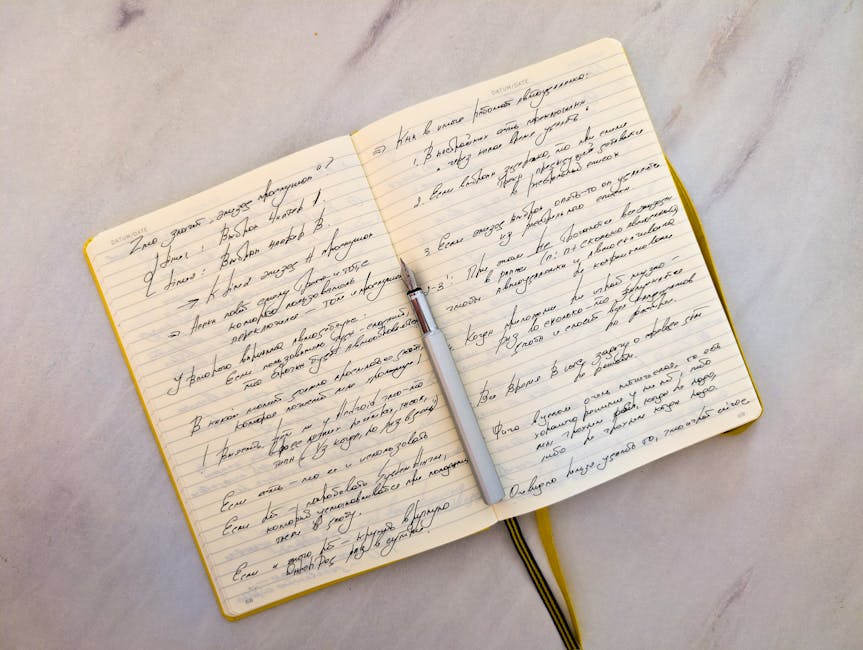
Just as there isn’t one “best” way to learn, there isn’t one “best” way to journal. Your personality, your goals, and even your daily schedule should dictate the approach you take. Understanding the different styles helps you pick a system that feels natural and sustainable, rather than forcing yourself into a mold that doesn’t fit. The most effective journaling habit is one that genuinely supports your personal journey, not one that adheres to someone else’s rules.
- The Freeform Daily Log: This is the classic approach. You simply write, stream-of-consciousness style, about whatever comes to mind. It’s excellent for emotional processing, exploring thoughts without judgment, and capturing daily events as they happen. This style works best for individuals who enjoy uninhibited expression and don’t need external prompts. It demands a journal with plenty of blank or lightly lined space and robust paper that can handle varied pen pressures, different ink types, or even light sketches. The goal here is often quantity and flow over rigid structure, providing a cathartic release.
- Bullet Journaling (BuJo): Far more structured, a Bullet Journal combines daily logging, to-do lists, habit tracking, and future planning into one customizable system. It uses specific symbols (bullets) to denote tasks, events, and notes, allowing for rapid logging. This method suits highly organized individuals, those who thrive on structure, or anyone looking to integrate planning with reflection. It typically requires a dotted grid notebook, like a Leuchtturm1917, for maximum flexibility in layout design. The dotted grid provides enough guidance for straight lines and consistent spacing, but also the freedom to create custom layouts for calendars, trackers, and collections. The beauty of BuJo is its adaptability; you design the pages yourself to fit your evolving needs.
- Prompt-Based & Guided Journaling: Many journals now come with pre-written prompts, questions, or specific sections (e.g., “three good things,” “today’s intention,” “future-self journaling”). This is ideal for beginners, those who feel intimidated by a blank page, or individuals looking to focus on specific areas like gratitude, personal growth, mental wellness, or even specific therapeutic approaches like shadow work. These journals are inherently self-educating, guiding you through reflective exercises. They remove the pressure of “what to write,” letting you focus on the “how to reflect” and delve deeper into particular themes.
- Gratitude Journaling: A focused practice where you consistently record things you are grateful for. This can be as simple as listing three specific things each day. It’s a powerful tool for shifting perspective, cultivating positivity, and improving overall well-being by consciously training your brain to notice the good. Any notebook can serve as a gratitude journal, though smaller, more intimate journals are often preferred for this particular practice. Consistency and specificity are more important than length or depth here, making it a low-barrier entry point to journaling.
- Themed or Specialized Journals: These cater to specific interests or needs, such as dream journals, travel journals, reading journals, project journals for creative endeavors, or even fitness and nutrition logs. They often have tailored layouts or specific sections relevant to the theme, making it easy to track and reflect on a particular area of your life. If you have a passion you want to explore deeply, a specialized journal can provide the perfect framework and dedicated space. This approach helps maintain focus and build expertise in a particular area, creating a valuable record of your journey.
Don’t be afraid to experiment. You might start with freeform and find you need more structure, or vice-versa. The key is to find what resonates and supports your unique path.
Choosing Your Companion: Top Physical Journals for Daily Use (2026 Edition)
Once you understand your preferred journaling style, the next step is selecting the right physical journal. The market is full of options, but certain brands consistently deliver on quality, durability, and user experience. Remember, the best journal for you is the one you’ll actually use consistently, feeling good in your hand and inspiring your thoughts rather than becoming another dusty item on a shelf.
| Journal Name | Approx. Price (2026) | Key Features | Ideal For |
|---|---|---|---|
| Moleskine Classic Notebook | $18 – $25 |
|
Traditionalists, writers, those who prefer simple elegance. Good for ballpoint pens and pencils. Its paper is generally not fountain pen friendly. |
| Leuchtturm1917 Medium A5 Dotted Notebook | $20 – $28 |
|
Bullet Journal enthusiasts, fountain pen users, those needing structure and high paper quality. Handles most inks well with minimal ghosting. |
| Midori MD Notebook (A5) | $15 – $22 |
|
Paper connoisseurs, fountain pen users, minimalists who value writing experience above all. Provides a luxurious, smooth surface. |
| Rhodia Webnotebook (A5) | $18 – $25 |
|
Users prioritizing a professional look, and an exceptionally smooth writing surface. Often considered superior for fountain pens due to Clairefontaine paper. |
| Scribbles That Matter Dotted Journal (A5) | $20 – $30 |
|
Bullet Journalers seeking heavy-duty paper, vibrant cover options, and comprehensive features at a mid-range price point. Offers a robust, all-in-one solution. |
For most daily journaling, the Leuchtturm1917 Medium A5 Dotted Notebook offers the best all-around value. Its numbered pages, pre-printed table of contents, and excellent paper quality (80 gsm, ink-proof) make it incredibly versatile for both structured bullet journaling and freeform reflection. It lays flat, which is a significant ergonomic advantage, preventing cramped hands during long writing sessions, and handles most fountain pens well without significant bleed-through. At around $25, it’s a wise investment for a consistent daily practice that can adapt to various styles.
However, if paper quality is your absolute top priority, especially for fountain pen enthusiasts who crave the perfect writing surface, the Midori MD Notebook is an unparalleled choice. Its 80 gsm MD paper is famously smooth and resistant to feathering, providing a luxurious writing experience for around $18-22. It’s a minimalist’s dream, stripping away extra features like elastic bands or pockets to focus purely on the writing surface itself. For those who find joy in the tactile feel of pen on exceptional paper, this is the definitive option.
Conversely, for those who prefer the classic, understated elegance and are primarily using ballpoint pens or pencils, the Moleskine Classic Notebook remains a strong contender. Its iconic design, various sizes, and reliable build quality (acid-free 70 gsm paper) make it a timeless choice for around $20. While its paper might not stand up to wet inks as well as its competitors, its simplicity, widespread availability, and familiar aesthetic are hard to beat for a straightforward, no-frills journaling experience.
Beyond the Notebook: Optimizing Your Journaling Habit

The journal itself is only one piece of the puzzle. The true magic happens in the consistency of the practice. Establishing a ritual around your journaling time can make it much easier to maintain, transforming it from a chore into a cherished part of your day. It’s about creating an environment and a mindset that invite reflection, making the act of writing feel less like a task and more like a gentle, welcome pause in your routine.
Establishing a Routine
Pick a consistent time each day. Morning journaling (often called “morning pages”) can help clear your mind, set intentions for the day, and process lingering thoughts before the day’s demands take over. Evening journaling allows for reflection on the day’s events, emotional processing, and a chance to unwind before bed. Even ten minutes at the same time every day builds a powerful habit. Don’t wait for inspiration; show up at the appointed time, even if you only write “nothing to write.” The act of showing up, consistently, is what builds momentum and cements the habit.
Pair journaling with an existing, strong habit. This technique, called “habit stacking,” makes the new practice feel less like an added burden and more like a natural extension of your established routine. For example, after you finish your morning coffee, immediately open your journal. Or, right after you brush your teeth at night, spend five minutes writing. By linking it to something you already do without thinking, you create a powerful trigger for your journaling practice, making it easy to start and hard to skip.
The Role of Environment
Create a dedicated journaling space, if possible. This doesn’t need to be elaborate; a comfortable chair, good lighting (natural light is always a bonus), and a clutter-free surface are often enough. The idea is to signal to your brain that “this is where reflection happens.” Keeping your journal and preferred pen easily accessible in this spot removes any friction or extra steps, significantly increasing the likelihood you’ll follow through. This psychological anchoring can make a huge difference.
Consider your tools. A pen you genuinely enjoy writing with can elevate the entire experience. It doesn’t have to be expensive, but it should feel comfortable, glide smoothly across the page, and perhaps even offer your preferred ink color or tip size. Small details, like a soothing cup of tea, gentle instrumental music, or a lit candle, can further enhance the atmosphere, transforming your journaling time into a mini-retreat you genuinely look forward to. These sensory cues create a pleasant association with the act of writing.
Journaling’s Evolving Landscape: What’s Next for Personal Reflection?

As technology advances and our understanding of personal well-being deepens, the world of journaling continues to evolve. While the core human need for self-reflection remains constant, the tools and approaches we use are always expanding. What might the future hold for these deeply personal instruments of self-discovery and growth, and how will they adapt to our changing lives?
Will AI-powered journals replace traditional ones?
Highly unlikely. While AI can offer prompts, analyze sentiment, and even summarize themes in digital entries, it cannot replicate the tactile, sensory experience of putting pen to paper. The physical act of writing engages different parts of the brain, aiding memory, processing, and emotional regulation in ways typing often doesn’t. AI tools will likely serve as powerful assistants to journaling, perhaps offering insights or helping users identify patterns in their digital logs. They might provide personalized prompts based on previous entries or suggest areas for deeper reflection. Imagine an AI that helps you spot recurring anxieties or celebrate consistent gratitude themes. However, the intimate, private connection forged with a physical journal, free from algorithms and screens, will remain irreplaceable for many. The very act of disconnecting from technology to engage in analog writing is a significant draw for a growing number of people seeking digital detox and mindful presence.
Are sustainable journals the new standard?
Absolutely. Consumer awareness about environmental impact is growing rapidly, and the journaling industry is responding with increasing vigor. We are already seeing more journals made with recycled paper, responsibly sourced wood pulp (FSC-certified), and innovative covers from materials like cork, bamboo, or vegan leather. Brands are increasingly transparent about their manufacturing processes, supply chains, and carbon footprint. Expect to see an even greater emphasis on refillable systems, biodegradable components, plant-based inks, and localized manufacturing in the coming years. This shift isn’t just a fleeting trend; it’s becoming an expectation for conscientious consumers, reflecting a broader commitment to mindful living that extends to our personal practices and the tools we use for them. The future of journaling is not only about self-discovery but also about responsible consumption.
The fundamental act of journaling, the timeless quest for self-understanding and intentional living, will persist. How we choose to engage with it, whether through traditional paper or innovative digital tools, will continue to expand, offering endless possibilities for personal growth and deeper self-connection.