You’re three weeks into a sketchbook, working on a shaded portrait, and the 6B pencil you’re using snaps at the tip for the third time in one session. You blame your grip. You probably shouldn’t. In most cases, repeated tip breakage in graphite pencils comes from one of three predictable causes — and the pencil brand is only one of them.
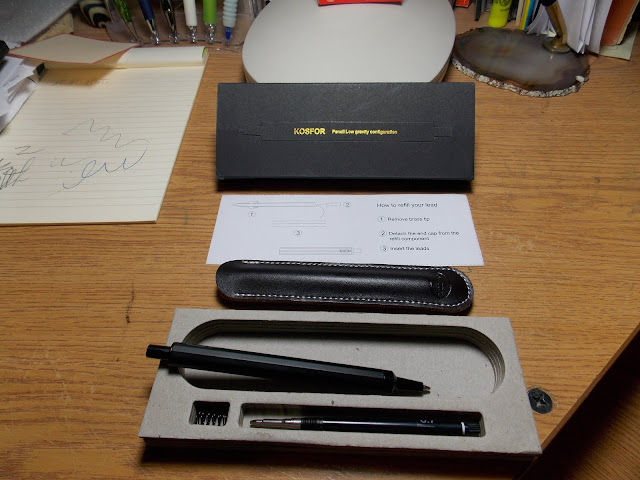
KOSFOR graphite pencil sets have become one of the more visible options in entry-level art supply searches. The brand positions its sets toward students, beginner artists, and general note-takers, typically pricing a 12–14 piece grade set between $9 and $14. That puts KOSFOR in direct competition with Faber-Castell, Staedtler, and General Pencil Company at the lower end — and well below the Palomino Blackwing tier.
What follows is a breakdown of what KOSFOR pencils actually deliver, how they compare to established alternatives, and the cases where paying more — or less — is the smarter choice.
This is not legal advice — consult a licensed attorney for any legal matters. This article is for informational purposes only.
What the KOSFOR Pencil Actually Is
KOSFOR is an art supply brand that primarily distributes through online retail platforms. Its flagship product is a graphite pencil set covering a full grade range, typically from 9H to 9B, housed in a zippered case or tin. Each pencil uses a cedar wood casing — a meaningful construction detail, because cedar sharpens cleanly without producing long splinters that catch on standard sharpener blades.
The core material is a graphite-clay mixture, as with all graphite pencils. In harder grades (H range), more clay content creates a lighter, more precise line. In softer grades (B range), more graphite creates darker, smearable marks. The blend ratios in KOSFOR pencils are consistent with other pencils in the budget-to-mid tier range, based on typical manufacturing standards for this price class.
One notable characteristic of KOSFOR sets is the packaging: individual pencils are typically slotted or wrapped to reduce impact damage during shipping. This matters because internal core fractures — invisible until you sharpen — are the primary source of tip breakage in budget pencil sets, and they typically originate during transit, not from use.
What “Pencil Grade” Actually Means
The grading scale runs from 9H (hardest, lightest) through F and HB (middle range) to 9B (softest, darkest). H grades contain more clay binder, which makes the graphite mix harder and the line deposit finer and lighter. B grades contain more graphite relative to clay, producing thicker, darker, more easily smeared marks.
For standard writing and note-taking, an HB or F grade is the conventional recommendation. Most lined notebook paper is optimized to accept HB graphite cleanly. Softer grades tend to smear against paper surfaces that lack enough texture to trap loose graphite particles — a practical problem for left-handed writers whose hand travels over freshly written lines.
For drawing, the practical working range for most sketchers is HB through 4B. The 6B through 9B grades have narrow use cases — primarily large-format shading or expressive gesture work — and many experienced artists work almost entirely within a two- or three-grade range, building tonal variation through pressure and paper texture rather than grade switching.
Who KOSFOR Positions This Product For
The brand’s marketing language targets three distinct groups: students completing drawing courses who need a full grade range on a limited budget, hobbyist artists who want to experiment without committing to premium pricing, and teachers purchasing classroom supplies in quantity.
A 14-piece KOSFOR set typically retails at $9–$13 on major platforms. Compare that to the Faber-Castell Castell 9000 12-piece set at $12–$18, or the Staedtler Mars Lumograph 12-piece at $15–$22. The price difference is real and meaningful at scale — a teacher stocking 30 student kits saves $90–$270 by choosing KOSFOR over Staedtler without necessarily compromising on grade range coverage.
KOSFOR vs. Staedtler, Faber-Castell, Palomino: A Direct Comparison
The practical question isn’t whether KOSFOR pencils are good in the abstract — it’s whether they’re good enough for your specific use case given the alternatives at similar prices. This comparison covers the four most commonly purchased graphite pencil options across different price tiers:
| Brand / Set | Pieces in Set | Price Range | Strongest Use Case | Core Consistency |
|---|---|---|---|---|
| KOSFOR Graphite Set | 12–18 pencils | $9–$14 | Beginners, grade exploration, bulk classroom use | Adequate; mid-range grades more reliable than extremes |
| Faber-Castell Castell 9000 | 12 pencils | $12–$18 | Academic use, general drawing, reliable all-rounder | High; consistent across full grade range |
| Staedtler Mars Lumograph | 12 pencils | $15–$22 | Technical illustration, architectural drawing | Very high; uniform hardness in H grades especially |
| Palomino Blackwing 602 | 12 pencils | $22–$28 | Extended writing sessions, manuscript drafts | Premium; wax-infused core, low friction on paper |
| General’s Semi-Hex Drawing Pencils | 4 pencils (2B–6B) | $5–$8 | Focused sketching range, budget-tier shading work | Variable; acceptable in the 2B–4B range |
The Performance Gap at Grade Extremes
In the mid-range grades — HB through 3B — KOSFOR pencils perform comparably to the Faber-Castell Castell 9000 for most tasks. Line quality is consistent, the graphite deposits smoothly on standard drawing paper, and the cedar casing sharpens without excessive splintering. The gap opens at the extremes: the 6H through 9H range and the 8B through 9B range.
Very hard grades in budget pencil sets sometimes contain slight inconsistencies in the clay-graphite ratio, which manifests as occasional skipping or slightly varying line weight. Very soft grades can have less uniform graphite distribution, which causes inconsistent smearing behavior. These are minor issues in casual use but become noticeable if you rely on those extreme grades regularly. The Staedtler Mars Lumograph holds a measurable edge in the hard H grades for technical drawing specifically.
When KOSFOR Is the Correct Choice
If you’re a first-semester drawing student who has been assigned to purchase a full grade set and isn’t yet certain whether drawing will become a sustained practice, KOSFOR is a defensible first purchase. The mid-range performance is adequate for learning fundamentals, the price risk is low, and the grade range is sufficient to complete most introductory coursework. Upgrading to Faber-Castell or Staedtler once you’ve identified the grades you actually use most is the more cost-efficient long-term path than buying premium from day one.
Choosing the Right Pencil Grade for Your Task
Brand selection matters less than grade selection for most users. A premium pencil in the wrong grade will frustrate you more than a budget pencil in the right one. Here’s a practical guide to matching grade to task:
- Everyday writing and note-taking: HB or F. Most notebook paper accepts these grades cleanly. Softer grades deposit too much loose graphite on smooth lined paper and smear under a moving hand.
- Light sketching and construction lines: 2H or H. Hard enough to erase without leaving impressions in the paper surface. Use this for initial underdrawings before committing to darker marks.
- General figure drawing and portraiture: HB through 3B. This range handles the majority of line work and early shading in most drawing styles. The most-used grades in any artist’s kit.
- Mid-range shading and tonal gradients: 4B through 6B. Noticeably darker deposit, with a softer feel against the paper. Works well on textured drawing paper; less effective on smooth printer paper where graphite tends to sit on the surface rather than embedding in the tooth.
- Deep shadows and expressive bold marks: 8B and 9B. These grades smear readily and are difficult to erase cleanly. They work best in large-format work where dramatic dark areas are needed. Not suited for detail work of any kind.
- Technical and architectural drawing: 2H through 6H. Precise, light lines with minimal smearing. These grades see the most quality variation between budget and premium brands — which is why Staedtler Mars Lumograph’s reputation is particularly strong in this range.
A useful exercise before buying a full set: work exclusively with a 2B for two weeks. This forces you to build tonal range through pressure and stroke variation rather than grade switching. Most experienced draftspeople, when asked what grades they actually use, name two or three. A full 14-grade set is often more reassuring to own than it is useful in practice.
Why Pencil Tips Keep Breaking — and What Actually Causes It
Tip breakage is the most frequent complaint across all budget pencil reviews, and it’s routinely blamed on the pencil. More often than not, the cause is something else entirely.
The first and most common cause is internal core fracture from shipping impact. If pencils ship without adequate protective packaging — tight case inserts, foam sleeves, or individual wrapping — the graphite core can crack inside the wood during transit. The pencil looks undamaged externally. But when you sharpen into the fractured zone, the tip separates immediately. This is especially common with softer B-grade pencils, which have more graphite relative to clay and are structurally more fragile.
The second cause is sharpener blade quality. A dull rotary sharpener grips the graphite before it fully removes the surrounding wood, creating rotational torque on the core. This snaps even well-constructed pencils. Replacing the blade in a hand sharpener, or using a quality electric sharpener like the X-ACTO SchoolPro (approximately $30), eliminates most tip breakage across all brands at all price points. This single change makes more practical difference than switching pencil brands entirely.
The third cause is pressure habits. Pressing hard to darken a line creates a concentration of mechanical stress right behind the tip — exactly where the pencil is thinnest. With 4B and softer grades, heavier pressure doesn’t produce meaningfully darker lines. It breaks tips. The fix is using a softer grade at a lighter pressure, not applying more force to the grade you already have in hand.
KOSFOR pencils are not immune to any of these issues. They’re also not uniquely susceptible. If you experience tip breakage immediately after opening a KOSFOR set, check the tips of several unsharpened pencils by holding them up to a light source — internal fractures sometimes create visible fissures at the wood end. If three or more pencils in a set show this, the set likely suffered transit damage and a replacement request is typically warranted under standard retail return policies.
When NOT to Buy KOSFOR Pencils
If you’re doing technical illustration, architectural drawing, or any work that relies on consistent hard-grade lines — skip KOSFOR and buy Staedtler Mars Lumograph instead. The $6–$8 price difference on a 12-pack is recoverable. The frustration of inconsistent H-grade line weight on a measured drawing is not.
Similarly, if your primary use case is extended writing — manuscript drafts, journaling, or any session lasting more than 45 continuous minutes — the Palomino Blackwing 602 is a materially different product. Its wax-infused core reduces friction significantly. Writers who have switched to it frequently report less hand fatigue in long sessions. At roughly $2.25 per pencil versus $0.75–$1.00 for KOSFOR, the cost is real. For a daily writing practice, most users find it justifiable within a few weeks.
The General’s Semi-Hex Drawing Pencils at $5–$8 for a focused 4-grade range (2B through 6B) are also worth considering if you already know you work primarily in the soft range and don’t need a full set. Fewer grades at slightly better quality is often more practical than owning 14 pencils and using four of them regularly.
Three Habits That Extend Any Pencil’s Life
Store Pencils Horizontally in a Flat Case
Storing pencils tip-down in a cup or jar applies sustained gravitational stress to the graphite core at the sharpened tip junction. Over time — particularly in softer B grades — this creates the same type of internal micro-fractures that cause tip breakage during use. Horizontal storage, in a zippered flat case, a pencil roll, or a shallow drawer, removes this stress entirely. This applies equally to KOSFOR, Faber-Castell, Staedtler, and any other brand. It costs nothing to change the habit.
Use a Blending Stump Instead of Your Finger
Using a finger to blend graphite deposits skin oil onto the paper surface. Skin oil changes the surface tension and affects how graphite adheres to subsequent layers. Over a shaded area, this creates subtle variations in tone that are difficult to correct without lifting graphite entirely. A tortillon — a rolled paper blending stump, available for $3–$6 for a pack of six — blends graphite cleanly without contaminating the paper. The difference is most visible in the 4B–8B range where soft graphite deposits are being pushed and merged deliberately.
Match Your Grade Range to Your Actual Practice
Before purchasing any multi-grade set, identify the two or three grades you already reach for most often. Most sketchers use HB, 2B, and 4B for roughly 80% of their work. If that’s your pattern, buying a 14-grade KOSFOR set gives you 11 pencils you’ll rarely touch. A narrower set from the grades you actually use — whether KOSFOR, Faber-Castell, or any other brand — is more practical and keeps your kit lighter. This is a purchasing pattern issue more than a brand issue, but it affects nearly every decision in the pencil category.
The Verdict: KOSFOR for Beginners, Something Else for Serious Work
KOSFOR pencils make a reasonable first purchase for students and beginners who need a full grade range without a high financial commitment. The mid-range grades — HB through 4B — perform adequately for learning fundamental drawing and shading technique, the cedar casing is a legitimate quality indicator, and the price makes experimentation genuinely low-risk. That’s the honest case for buying them.
The limitations are real but predictable: less reliable performance in the extreme H and B grades, and the standard shipping-damage risk that affects all budget pencil sets. If several tips break immediately after purchase, that’s most likely a transit issue rather than a product quality failure — and it’s worth contacting the seller directly.
For anyone past the beginner stage with an established drawing practice, the Faber-Castell Castell 9000 is the clearest step-up recommendation: more consistent core quality across the full grade range, better performance in the H grades, and a price difference small enough to justify for regular use. The Staedtler Mars Lumograph is the specific pick for technical and architectural work. The Palomino Blackwing 602 stands apart as a recommendation exclusively for extended writing — it’s a different product category in practice, not simply a more expensive pencil.
KOSFOR occupies a specific and legitimate space in the market. Knowing which space that is — beginner and student use, bulk purchasing, grade range exploration — is what makes the purchase decision clear rather than frustrating.
This is not legal advice — consult a licensed attorney for any legal matters. This content is for informational purposes only.