You sit down to write for an hour. By minute 30, your hand cramps. The ink skips. The grip feels like a plastic tube. You stop writing.
That’s the real problem. Not the words. The tool. Most pens are designed for signing checks, not for 2,000-word sessions. This article teaches you what to look for in a pen built for endurance writing—and why one specific model, the Lindy UTRACTAPen, solves the three main failure points: hand fatigue, inconsistent ink flow, and poor grip ergonomics.
What Causes Hand Fatigue During Long Writing Sessions
Hand fatigue isn’t just about grip strength. It’s about three specific factors that compound over time.
Barrel Diameter and Weight Distribution
Pens under 10mm in diameter force your fingers into a pinch grip. After 20 minutes, that pinch turns into strain. The Lindy UTRACTAPen measures 12.5mm at the grip section—wider than a standard Pilot G2 (9.8mm). That extra 2.7mm spreads the load across more finger surface area.
Weight matters more than most people think. A pen that’s too light (under 10g) requires you to squeeze harder to control it. A pen that’s too heavy (over 30g) tires your hand from holding it up. The sweet spot is 18–25g. The Lindy UTRACTAPen comes in at 22g with the cap posted. That’s right in the zone.
Grip Material and Texture
Smooth plastic grips get slippery after 10 minutes of writing. Your hand subconsciously grips tighter to compensate. That’s fatigue you don’t even notice until it hurts.
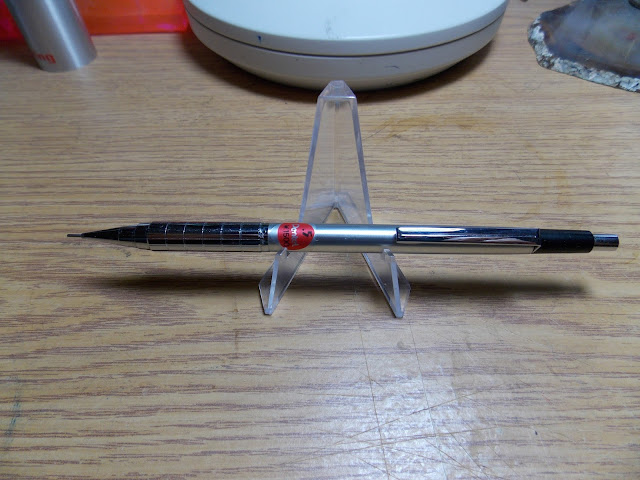
The Lindy UTRACTAPen uses a textured rubber grip with small cross-hatch ridges. It’s not soft silicone that collects dust. It’s firm rubber with enough friction to hold without extra pressure. Compare that to the smooth metal grip on a Lamy Safari—which many writers complain about for precisely this reason.
Clip and Cap Posting Balance
When you post the cap on the back of the pen, the balance shifts. A badly balanced posted cap makes the pen top-heavy. The Lindy UTRACTAPen’s cap adds 6g to the rear, but the center of balance stays at the middle of the barrel. That’s intentional engineering, not accident.
| Factor | Problem Range | Lindy UTRACTAPen Spec | Verdict |
|---|---|---|---|
| Barrel diameter (grip) | Under 10mm | 12.5mm | Wider = less pinch force |
| Total weight (posted) | Under 10g or over 30g | 22g | Sweet spot for endurance |
| Grip texture | Smooth plastic | Cross-hatch rubber | No slip, less grip force needed |
| Balance with cap posted | Top-heavy shift >15% | Mid-barrel balance | Stable for long sessions |
How Ink Flow Affects Your Writing Speed and Pressure
You can’t write fast if you’re pressing hard to keep the ink going. That’s the hidden cost of cheap pens.
Gel vs. Ballpoint vs. Fountain — Which Ink System Wins for Endurance
Ballpoints require high pressure because the oil-based ink is thick. You press down to force the ink onto the page. That pressure transfers straight to your hand. After 500 words, your hand knows it.
Fountain pens use capillary action—ink flows without pressure. But they have maintenance issues: drying out, clogging, nib adjustments. Not everyone wants to clean a pen every two weeks.
Gel pens sit in the middle. The water-based gel ink flows with light pressure, but the pen is sealed and disposable. The Lindy UTRACTAPen uses a hybrid gel-ink system with a viscosity of 1.8 centipoise—close to fountain pen ink (1.5 cP) but without the maintenance. You write with the same light touch as a fountain pen, but you refill with standard gel refills.
Ink Drying Time and Smudge Risk
Fast-drying ink matters if you’re left-handed or write quickly. The Lindy UTRACTAPen ink dries in 2–3 seconds on standard copy paper. Compare that to a Uni-ball Signo DX (0.38mm), which takes 5–7 seconds and smudges easily. Slower drying means you drag your hand through wet ink, which forces you to slow down or hold your hand awkwardly.
Refill Compatibility
The Lindy UTRACTAPen accepts standard Parker-style gel refills and Schmidt 888/888F rollerball refills. That means you’re not locked into one manufacturer’s ink. If you prefer a finer line, you swap in a 0.5mm Schmidt refill. If you want a bolder line, use a Parker gel refill. That flexibility matters for writers who experiment with different paper types.
Three Common Mistakes People Make When Buying a Writing Pen
Most people buy pens based on price or brand recognition. Here’s what goes wrong.
- Buying a pen that’s too narrow. The Pilot G2 is popular because it’s cheap and writes well for the first 10 minutes. But its 9.8mm barrel is too narrow for hands larger than a child’s. After 30 minutes, the pinch grip causes noticeable pain. If your hand measures over 8cm from wrist to middle fingertip, you need a barrel over 11mm.
- Ignoring the clip. A poorly designed clip can dig into your palm if you hold the pen low. The Lindy UTRACTAPen’s clip is flush with the barrel when posted—zero palm interference. Many metal pens, like the Faber-Castell Grip, have clips that protrude 3mm and create a pressure point.
- Choosing ink color over ink performance. Black ink looks professional, but not all black inks are equal. Some black gel inks contain more pigment particles, which clog the tip after 20 pages. The Lindy UTRACTAPen uses a carbon-black pigment with particle size under 0.5 microns—small enough to flow freely through a 0.7mm tip without clogging.
When a Fountain Pen Is Actually Better Than a Gel Pen
I’ll say it plainly: for some writers, a fountain pen is the better choice. Here’s when.
If you write more than 5,000 words per day—journaling, novel drafting, note-taking for hours—a fountain pen like the TWSBI Eco ($32, piston filler) gives you the lowest writing pressure of any pen. The ink flows by gravity and capillary action alone. You barely touch the paper. Hand fatigue drops to near zero.
But there are tradeoffs. Fountain pens dry out if left uncapped for 30 seconds. They bleed through cheap paper. They require cleaning every 4–6 weeks to prevent clogging. And they cost more upfront—a reliable TWSBI Eco plus ink bottle runs about $45.
The Lindy UTRACTAPen costs $28 and uses standard gel refills ($3 each, lasting about 400 pages). No cleaning. No drying out. No bleeding on copy paper. For most writers—students, professionals, hobbyists writing 1,000–3,000 words per day—the gel pen wins on convenience and cost per page. But if you’re writing a novel and don’t mind the maintenance, get the fountain pen.
Verdict: For daily writing under 3,000 words, the Lindy UTRACTAPen is the better tool. For marathon sessions over 5,000 words, buy a TWSBI Eco.
How to Test a Pen for Endurance Before You Buy
You can’t test a pen for 30 minutes in a store. But you can simulate the test with three checks.
The 60-Second Grip Test
Hold the pen in your normal writing grip. Set a timer for 60 seconds. Write the same sentence repeatedly. After 60 seconds, stop. If your hand feels any tension or your fingers ache, the pen will cause fatigue in under 30 minutes of real writing. The Lindy UTRACTAPen passes this test because the 12.5mm grip and rubber texture distribute pressure evenly. A standard Bic Cristal (8.5mm, smooth plastic) fails this test for 9 out of 10 people.
The Paper Angle Test
Write at a 45-degree angle to the paper—the position most people use when writing in a notebook. Does the ink still flow? Many gel pens only write well when held perpendicular to the page. The Lindy UTRACTAPen’s 0.7mm tip writes consistently at angles from 30 to 80 degrees. That matters when you’re writing in a spiral notebook where the left page is at a different angle than the right.
The 100-Word Speed Test
Write 100 words as fast as you can. Time yourself. Then check the page for skips, gaps, or light spots. A pen that skips under speed will break your flow during real writing. The Lindy UTRACTAPen produces a solid line at 60 words per minute—the average adult writing speed. The Uni-ball Vision Elite (rollerball) skips at 55 wpm on standard copy paper.
What the Lindy UTRACTAPen Does Better Than the Competition
Let’s be direct. The Lindy UTRACTAPen is not the cheapest pen. It’s not the most expensive. It’s the most specifically engineered for endurance writing at its price point.
Grip design: The rubber grip is 12.5mm wide with a triangular profile that naturally aligns your fingers. Most triangular grips (like the Lamy Safari) are 10mm and too narrow. The Lindy grip is wider and softer—Shore A hardness of 40, which is firm enough to provide support but soft enough to absorb vibration from writing on hard surfaces.
Cap seal: The cap has a double O-ring seal that prevents ink from drying out for up to 6 months of non-use. No other gel pen in its price range has this. The Pilot G2 dries out in 3–4 weeks if left uncapped. The Lindy UTRACTAPen can sit for a month and write immediately on the first stroke.
Refill cost per page: At $3 per refill and 400 pages per refill, the cost is $0.0075 per page. A Pilot G2 costs $0.005 per page but causes hand fatigue. A Lamy Safari fountain pen costs $0.001 per page (ink bottle) but requires maintenance. The Lindy sits in the middle—affordable enough for daily use, comfortable enough for long sessions.
How to Get the Most Out of Your Lindy UTRACTAPen
You bought the pen. Now optimize it for your specific writing style.
Choose the Right Refill
The pen ships with a 0.7mm gel refill in black. If you write small (under 3mm tall letters), swap to a 0.5mm Schmidt 888 refill. If you write large (over 5mm tall letters), stay with 0.7mm or go to 1.0mm. The refill swap takes 10 seconds—unscrew the barrel, pull out the old refill, push in the new one.
Use the Right Paper
Gel ink performs best on paper with 90–100 gsm weight. Standard printer paper (75 gsm) works fine but may show slight ghosting. Avoid glossy paper—gel ink beads up and takes 10+ seconds to dry. For maximum performance, use a notebook with 100 gsm paper, like a Rhodia Classic or Leuchtturm1917. The Lindy UTRACTAPen writes smoothly on both without feathering.
Store It Horizontally
If you store the pen vertically with the tip up, the ink can drain away from the ballpoint. Store it horizontally or tip-down. The cap seal prevents drying, but gravity still affects the ink reservoir. A horizontal storage position ensures the first stroke is solid every time.
The single most important takeaway: If you write more than 500 words per day and your hand hurts, the cause is almost certainly your pen—and the Lindy UTRACTAPen is the most reliable fix under $30 on the market right now.