So, you’ve seen the hype around Blackwing pencils. Maybe you’ve even picked up a box of 602s. But now you’re eyeing those limited-edition “Volumes” series, wondering if they’re just expensive collector bait or genuinely better. Which ones are worth your money?
I’ve been drawing and writing with Blackwings for decades, back when they were just old Eberhard Faber stock. I’ve seen the Palomino rebirth, the launch of the standard lineup, and every single Volume released since. Trust me, I’ve wasted money on some duds, and struck gold with others. Let me tell you what I’ve learned.
The Core Blackwings: Which One Should You Actually Buy?
Forget the limited editions for a second. If you’re just getting into Blackwing, or you need a reliable workhorse, you absolutely need to understand the three mainstays. People get hung up on the 602, but frankly, it’s not for everyone. Your choice here defines your core experience. I’ve tried to force myself to love certain models, and it’s never worked. Find your match, stick with it.
Here’s the breakdown of the standard lineup, based on years of daily use and dozens of boxes:
| Model | Lead Hardness | Feel/Darkness | Best Use Case | My Verdict |
|---|---|---|---|---|
| Blackwing 602 | Firm (Hard) | Smooth, dark grey line. Holds a point well. | Writing, fine detail, sketching, everyday carry. | Buy this if: You want a classic, crisp line that lasts. Excellent for journaling. Price: ~$25/dozen. |
| Blackwing Pearl | Balanced (Medium) | Very smooth, slightly darker than 602. Good balance. | All-around use, general writing, sketching. | Buy this if: You want the best all-rounder. My personal daily driver for years. Price: ~$25/dozen. |
| Blackwing Natural | Soft (Softest) | Dark, rich black line. Noticeable grit, but very dark. | Shading, bold lines, expressive drawing. | Buy this if: You love a truly dark line and don’t mind sharpening more often. Price: ~$25/dozen. |
My clear preference? The Blackwing Pearl. It’s the Goldilocks pencil for me. The lead is dark enough for impact but firm enough to last through a good sketching session or several pages of notes. It’s truly a balanced pencil, delivering what most people actually need from a premium graphite tool.
Blackwing 602: The Legend
The 602 gets all the glory, and it’s a great pencil, don’t get me wrong. “Half the pressure, twice the speed” is a fantastic marketing line. It is firm, it does hold a point, and it’s perfect for people who write small or want a very consistent line. For quick notes, it’s a solid pick. But for extended writing or any kind of expressive drawing, I find it a little too stiff. It’s like a good suit: looks sharp, but not what you want to live in.
Blackwing Pearl: My Daily Driver
The Pearl is where it’s at for me. It’s responsive, smooth, and gives a satisfying dark line without feeling overly soft. I can switch from writing to sketching without missing a beat. The white finish with the gold ferrule just looks clean, too. I always keep a box of these on hand. If you’re unsure, start here. You won’t regret it.
Blackwing Natural: The Underrated Workhorse
The Natural, with its exposed cedar finish, is often overlooked. Its lead is the softest of the core three, making it incredibly dark. Yes, it wears down faster, and you’ll sharpen more often. But the pure blackness it lays down is unmatched by the other two. For bold statements, deep shadows, or just a pencil that feels substantial, the Natural is fantastic. Don’t let the “softest” label scare you; it’s still a well-engineered graphite, not a crayon.
Understanding the “Volumes” — Collector’s Item or Tool?
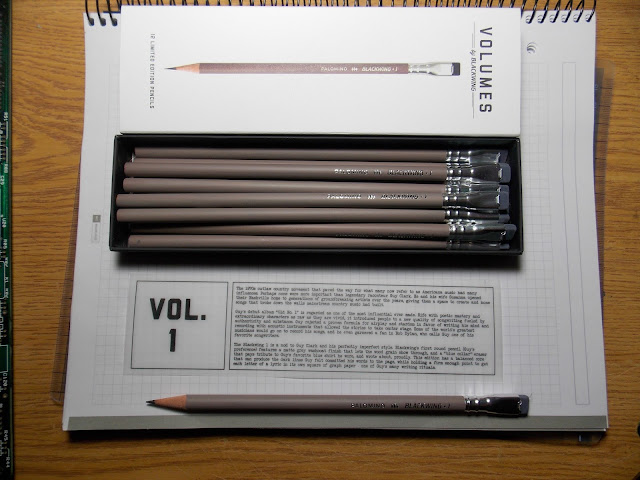
Here’s my bold, unvarnished opinion: most Blackwing Volumes are collector’s items first, tools second. And that’s okay. Blackwing does an excellent job with the themes, the packaging, and often, the unique finishes. They create a story with each release, and that’s powerful. But if you’re buying them solely expecting a dramatically different or superior writing experience compared to the core lineup, you’ll often be disappointed. You’re paying for the story, the limited run, and the aesthetics.
I’ve seen people buy a dozen boxes of a Volume pencil just to resell them at double or triple the price. If that’s your game, fine. But for the user, the artist, the writer, the real value comes from finding a pencil that enhances your work, not just your shelf. Don’t get caught in the FOMO trap. Evaluate each Volume on its own merits, and ask yourself: “Will I actually use this, or will it sit in a drawer?”
The Scarcity Factor
Blackwing releases quarterly Volumes, each with a unique theme, barrel color, ferrule, and sometimes a slightly tweaked lead formulation. The allure is their limited nature; once they’re gone, they’re gone (unless you pay exorbitant aftermarket prices). This scarcity drives the collecting behavior. Some Volumes are genuinely great pencils, but others are just pretty faces. The trick is discerning which is which before they sell out. This often means buying a box, trying it, and then deciding if you want more. It’s a gamble.
When to Splurge (and When Not To)
Splurge on a Volume if the theme deeply resonates with you, or if the lead formulation truly offers something you can’t get from the core line (which is rare). For instance, some softer Volumes have been excellent for drawing. Don’t splurge if you’re just trying to complete a collection you don’t care about, or if you think the unique color will magically make your handwriting better. It won’t. I’ve bought Volumes purely for the aesthetics – the gorgeous blue barrel of Vol. 200, for example – and those have been satisfying purchases, knowing full well I might not use them daily.
Essential Sharpening Tips: Don’t Ruin Your Lead
A Blackwing is only as good as its point. Seriously. You can buy the fanciest limited edition, but if you’re using a cheap, dull sharpener, you’re just grinding away good lead and breaking points. I learned this the hard way, destroying several expensive pencils before realizing my sharpening technique was the weak link. This isn’t rocket science, but it needs attention. It’s a simple skill that makes all the difference.
- Invest in a Good Sharpener: This is non-negotiable. Throw away those plastic school sharpeners. Get a Kum Long Point sharpener (around $8-10) or a Mobius + Ruppert brass sharpener (around $15-20). These are precision tools. They create a long, tapered point that exposes more lead, giving you a longer writing or drawing surface before needing to resharpen.
- The Two-Step Sharpening Method: Many long-point sharpeners are two-step. The first hole shaves the wood, exposing the graphite. The second hole then sharpens the exposed graphite to a fine point. Don’t skip the first step or go straight for the second. It’s designed for a reason. Take your time, don’t force it.
- Why Blade Quality Matters: High-quality sharpeners use sharp, consistent blades. Cheap sharpeners have inconsistent blades that tear the wood and lead, leading to breakage. Think about it: you’re shaving wood and graphite, two very different materials, with one blade. A good blade handles this transition smoothly. Replace blades when they get dull (yes, you can often buy replacement blades for good sharpeners!).
- Don’t Over-Twist: Once you feel the pencil reach its point, stop twisting. Continuing to twist just grinds the tip into dust and can cause it to break off inside the sharpener. It’s a gentle, firm process, not a brute-force one.
- Clean Your Sharpener: Wood shavings and graphite dust build up. Clean your sharpener regularly with a small brush or a puff of air. A clogged sharpener won’t give you a clean point.
The Two-Step Sharpening Method
With a Kum Long Point, for example, you’ll insert the pencil into the first hole (marked “1”) and twist until the wood casing is sufficiently pared back, exposing about 1/4 to 1/2 inch of lead. Then, carefully move the pencil to the second hole (marked “2”) and gently twist until you achieve your desired point. This method reduces stress on the graphite core, preventing breaks and giving you that signature Blackwing long point. It takes practice, but it’s worth it.
Why Blade Quality Matters
It sounds trivial, but the sharpness and angle of the sharpener’s blade are . A dull blade requires more pressure, which risks lead breakage. A well-honed blade, typical of German-made sharpeners like Kum or M+R, glides through the cedar and graphite, creating a clean, consistent taper. This results in a stronger, longer-lasting point. Don’t skimp on this accessory; it truly impacts the longevity and performance of your pencils, especially Blackwings.
My Absolute Favorite (and Least Favorite) Blackwing Volumes
This is where I get to be truly opinionated. I’ve shelled out for nearly every Volume, and some have become cherished tools, while others sit unused. It’s a mixed bag, and my preferences are strong. You might disagree, but this comes from literally trying to work with every single one of them. The price point of roughly $30 per box means you want to make an informed decision, or at least understand what you’re getting into.
For me, the Blackwing 200 (Architecture) is an absolute standout. It was released in 2013 and featured a stunning matte blue barrel with a silver ferrule and white eraser. But it wasn’t just pretty; the lead, which was somewhere between a Pearl and a Natural, was perfectly balanced for both sketching and writing. It had a wonderful smoothness, dark enough for expressive lines but firm enough to hold a good point for detail work. I bought several boxes of these after trying the first, knowing immediately it was a winner. It felt substantial, performed beautifully on various paper stocks, and just consistently delivered. If Blackwing ever re-releases a lead like this, I’m buying a lifetime supply. Its versatility was unmatched, making it fantastic for architects, artists, and writers alike.
On the flip side, my least favorite has to be the Blackwing 10001 (Eraser). This one came out in 2017. The concept was neat: a pencil dedicated to the eraser, celebrating the iconic Blackwing ferrule. It had a matte black barrel, shiny black ferrule, and a white eraser. The lead was a very soft, dark formulation – similar to the Natural, maybe even softer. But the design choice to include a very soft, almost smudgy lead, when the pencil’s theme was about correction and clean erasures, felt contradictory. The lead felt overly crumbly for me, wore down exceptionally fast, and the point dulled almost instantly. It was a beautiful looking pencil, no doubt, but as a writing or drawing instrument, it just wasn’t practical for my workflow. I found myself sharpening it constantly, and the erasure, while good, wasn’t enough to compensate for the lead’s performance. It felt like a gimmick rather than a genuinely useful tool. I still have a few, purely for display, but I’d never reach for one to actually work with.
Another surprising favorite was the Blackwing 24 (Chuck Jones). This one, released in 2014, had a beautiful grey barrel and an Extra-firm lead. Now, I usually prefer softer leads, but this Extra-firm was fantastic for quick, light sketching and very precise lines. It felt like a truly unique offering, not just a rehash. It allowed for such fine detail that it earned its spot in my travel kit. It’s hard to find now, but if you ever see one, grab it. It was a firm lead done right, with just enough smoothness to prevent scratching. This pencil showed that Blackwing could truly innovate within the firmness spectrum, not just the darkness.
The Best: Blackwing 200 (for me)
The Blackwing 200 remains the gold standard for me among the Volumes. Its lead offered an ideal blend of darkness and durability. It wasn’t as hard as the 602, nor as soft as the Natural, hitting a sweet spot that worked for both detailed architectural sketches and fluid writing. The matte blue finish was visually appealing, but it was the consistency and resilience of the lead that truly made it exceptional. I found it laid down a rich, consistent line without excessive smudging, and the point retention was impressive. For serious work, this was the Volume that truly felt like an upgrade, not just a novelty.
The Disappointment: Blackwing 10001
While aesthetically pleasing, the Blackwing 10001 missed the mark for me in terms of utility. The extremely soft lead, while dark, felt too fragile and prone to breaking during sharpening and use. It wore down with frustrating speed, demanding constant re-pointing. For a pencil themed around the eraser and correction, having a lead that required so much upkeep and generated so much graphite dust seemed counterproductive. It’s a beautiful collector’s piece, but as a practical writing or drawing tool, I found it significantly lacking compared to the reliable core models or even other standout Volumes.
Pencil Extenders: A Must-Have Accessory?
Yes. Absolutely. If you use your Blackwings until they’re stubs, a pencil extender (like Blackwing’s own aluminum model, around $10-15) is a smart purchase. It provides a comfortable grip and extends the life of those expensive pencils. Don’t toss a perfectly good stub. This is one accessory that pays for itself.
Ultimately, a pencil is a tool, and the best one is the one you actually use.