At 4:15 p.m., a child drops a backpack by the door, kicks off one shoe, and reaches for a tablet before opening a book. The problem may not be a lack of interest in reading. The living room is loud, the dining table still holds lunch dishes, and there is no clear place that tells the brain, “Now we read.” A useful reading corner does not need a large room or expensive furniture. It needs a protected seat, steady light, a small book supply, and a repeatable 20-minute routine.
How to choose the corner before buying anything
Measure the usable footprint
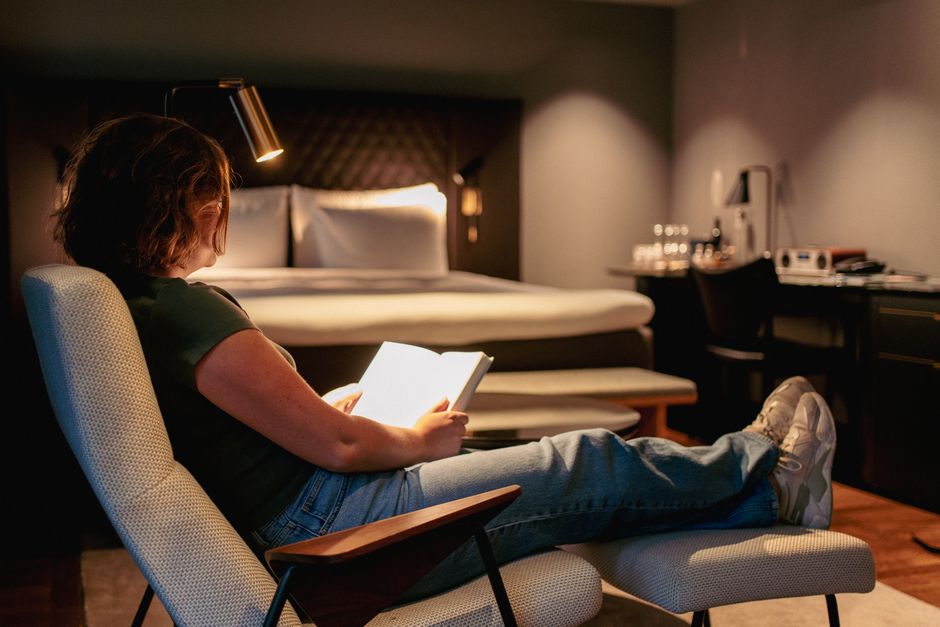
Use a tape measure and mark a rectangle at least 36 inches wide and 48 inches deep. That gives one reader room for a chair, a small side table, and space to stand up without knocking into a shelf. Leave at least 30 inches of clear walking space in front of the seat. If the corner is in a bedroom, keep the reading area separate from the bed by placing the chair at a right angle to it. A bed invites lying down; an upright seat supports active reading.
Check the light at 4 p.m., 6 p.m., and after sunset before choosing the final position. A bright window can create glare on glossy pages, while a dark corner makes children lean forward. Sit in the proposed spot with a paperback held at normal reading distance. If the page looks shadowed or reflective, the location needs a lamp or a different angle.
Use this five-minute layout test
- Put a dining chair in the proposed spot.
- Place a stack of five books beside it.
- Set a water bottle where the child can reach it without twisting.
- Walk past the setup several times to test traffic and noise.
- Ask the child to sit for five minutes and report what feels annoying.
This test catches the mistakes that pictures hide. A corner may look calm but still sit beside a rattling vent or a door that bangs shut. Do not buy furniture until the temporary setup works. The room has to pass the movement test first.
What a small reading corner costs in 2026
A practical setup with four focused pieces
Products become useful after the location and routine work. The following setup uses compact items that solve a clear problem. Prices are listed US prices checked in 2026 and can change with sales, delivery, and local tax.
Spend first on comfort and light
For most families, the clear winner is the POÄNG chair plus a good reading lamp. The chair provides a defined seat, while the lamp keeps pages readable after daylight fades. Add the BILLY only when books are currently scattered across several rooms. The Kobo Clara BW earns its place when storage is limited or a child borrows digital library books. It should not replace paper books for a reader who enjoys turning pages or needs fewer screens after school.
The cheapest workable version still follows the same order: test the corner with an existing chair, add a warm LED lamp, then organize five to ten books. Furniture comes last.
Which seat, light, and storage choices earn their space
Choose an upright seat, not the softest seat
The IKEA POÄNG is my pick for a child who reads for 20 to 30 minutes at a time. Its seat is 16 1/2 inches high, the back is tall, and the 22-inch seat width leaves room to shift without turning the chair into a bed. It also has a 10-year limited warranty. The tradeoff is depth: at 32 1/4 inches, it needs more floor space than a simple dining chair. For a very small room, keep the existing chair and add a firm cushion instead.
Do not buy a deep lounge chair for a child who already struggles to begin reading. A seat that encourages curling up can become a nap spot. Test posture for ten minutes in the store or at home. Feet should reach the floor or a low footrest, and the book should stay near eye level without bending the neck.
Use warm light for comfort and task light for pages
The IKEA FADO creates a soft glow, but it is not a full reading lamp by itself. Its 10-inch glass globe spreads light around the room and accepts a bulb up to 75 watts. Put it beside the chair, then add a warm-white LED bulb that points light toward the book. Do not place the lamp behind the reader, where the child’s head creates a shadow across the page.
The IKEA BILLY 31 1/2-inch shelf is a strong low-cost storage choice because it keeps books visible and stays only 11 inches deep. Anchor it to the wall and place heavy books on lower shelves. Keep only current choices in the corner; a shelf packed with 80 unread books turns selection into another chore. For after-school focus, six to twelve books beat a complete home library.
What should you avoid when buying a reading corner?

“Should I buy noise-canceling headphones?”
Usually, no. Headphones can block useful household sounds, make it harder for an adult to get the child’s attention, and add another device to manage. First move the corner away from traffic, close the door, and use a rug or curtain to soften sound. If the home is genuinely loud, try simple foam earplugs only with an adult’s guidance and never during a time when the child needs to hear alarms or instructions.
“Is a tent or canopy better than an open corner?”
Not for every child. A canopy can make a shared room feel private, but fabric can trap heat, collect dust, and reduce useful light. A tent also makes it harder to see posture and book position. Choose one only if the child reads safely while seated and the material does not block ventilation or become a play distraction. An open corner beside a wall is the better default.
Common buying mistakes
- Buying a desk when the goal is relaxed reading, not homework.
- Choosing a lamp by appearance without checking page shadows.
- Filling the shelf with too many books before the routine exists.
- Putting the chair beside a television because the area looks convenient.
- Ignoring the child’s body size and expecting one chair to fit every age.
The biggest failure is treating furniture as the solution. If the corner is uncomfortable, badly lit, or placed in a busy walkway, even an expensive setup will sit unused.
How to keep the corner working after homework
Refresh the choices, not the whole room
Every Sunday, replace two or three books and leave the rest in storage. Keep one easy book, one book connected to the child’s current interest, and one stretch book. This mix prevents the corner from feeling repetitive without creating a daily decision pile. Wipe the lamp, check the chair screws, and remove cups, toys, and loose papers. A five-minute reset is enough.
Use the corner as a protected promise
Adults should avoid turning the reading seat into a punishment spot or a place to finish unfinished worksheets. Reading works better when the child can trust what the space means. If attention drops, change the book or shorten the timer before changing the furniture.
That brings us back to the child who came home at 4:15 p.m. The backpack still lands by the door, but now the next step is clear: snack, two book choices, twenty quiet minutes, and a book returned to its shelf. The corner has done its job—not by making the house silent, but by making reading easy to start.