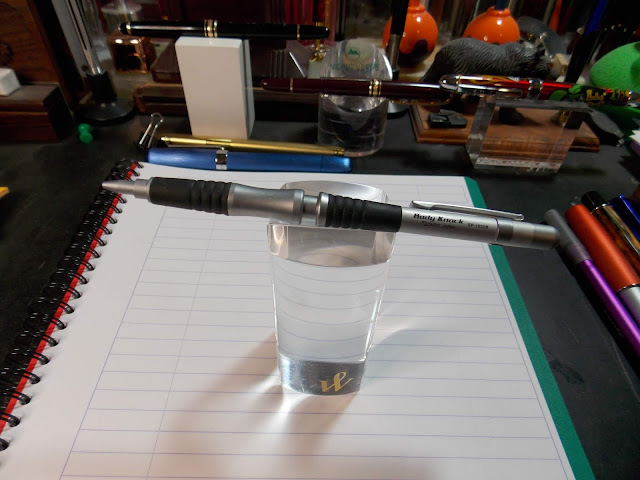
What is this Ohto Body Knock you keep hearing about? Is it some gimmick, or a genuine innovation for your writing experience? Let’s cut through the noise. It’s a specific, distinctive mechanism for extending and retracting a pen tip, developed by the Japanese manufacturer Ohto. It’s not a common push-button or twist. You interact with the pen’s body itself. Think about it: most pens are either clickers or twist-tops. Ohto decided that wasn’t enough. They went a different way, making the pen’s body the actuator. It’s certainly unique, but whether it’s better is where the discussion gets interesting. Some find it intuitive; others find it frustrating. There’s no middle ground.
What exactly is Ohto Body Knock, and why bother?
The Ohto Body Knock mechanism is exactly what it sounds like: you knock or flex the pen’s body to engage the tip. Specifically, it involves pressing down on the pen’s clip, which causes a slight deformation or movement in the pen body, triggering the internal mechanism to extend the writing point. To retract, you often repeat the same action. This isn’t just a quirky design choice; it’s an attempt to offer a truly one-handed operation that bypasses traditional top-knobs or rotating barrels. The idea is to make the pen an extension of your hand, reacting to a natural squeeze or press rather than a deliberate button push. It’s a bold move away from convention, and Ohto certainly committed to it. They saw a problem with existing mechanisms being too clunky or requiring a shift in grip. Their solution? Integrate the action into the very form of the pen.
Why bother with such a complex system? Because it differentiates. In a crowded market of pens that all feel and operate similarly, Body Knock stands out. It offers a tactile experience unlike anything else. For those who appreciate mechanical ingenuity and a distinct feel, it’s compelling. For others, it’s an unnecessary complication. The engineering behind it, however, is undeniable. It requires precise tolerances and thoughtful material choices to ensure consistent, reliable operation over time. This isn’t a cheap, throwaway mechanism. It’s designed to be a feature.
How it works: The Internal Mechanics
At its core, the Ohto Body Knock mechanism relies on a cam or lever system actuated by the pen body’s slight flex. When pressure is applied to the clip (or a specific point on the barrel, depending on the model), the pen’s outer casing shifts ever so slightly. This minor displacement translates internally into a larger movement of a lever, which then engages the spring-loaded cam that extends the pen tip. Retraction often uses a similar principle, resetting the cam with another flex. The key is the elastic deformation of the barrel material or the spring-loaded nature of the clip itself, which allows this movement without damaging the pen. It’s a clever bit of micro-mechanics, translating a subtle external force into a crisp internal action. The precision here is ; a millimeter off, and the mechanism either binds or fails to engage. This isn’t some simple clicker where a plastic detent grabs a shaft. This is more akin to a miniaturized Rube Goldberg machine, elegant in its complexity.
Body Knock vs. Traditional Retraction
Comparing Body Knock to traditional retraction systems reveals its strengths and weaknesses. A standard click-top pen, like a Bic Cristal or a Parker Jotter, uses a simple plunger and cam. Push the top, the tip extends. Push again, it retracts. It’s reliable, universally understood, and requires minimal thought. Twist pens, popular in more premium models, offer a silent, often smooth action, but definitely require two hands or an awkward grip change. Body Knock, on the other hand, aims for seamless, single-handed deployment. You don’t need to shift your grip to find a button. You just squeeze or press against the clip. This speed and fluidity can be a major advantage for quick notes or when one hand is occupied. The downside? It can be less intuitive initially. There’s a learning curve to finding the right pressure point and amount of force. Plus, accidental deployment can be a real issue if the pen is jostled in a bag or pocket. You won’t accidentally extend a twist pen, for instance. But a Body Knock? Absolutely possible.
The Core Problem Body Knock Solves (or Creates)
Let’s be blunt: the Ohto Body Knock mechanism solves a problem that few people actually articulated, but it creates a couple of new ones. It addresses the marginal inconvenience of traditional pen activation. You don’t need to change your grip, or use your thumb in a separate motion. Just a quick press of the clip against a surface or a firm squeeze on the barrel, and the pen is ready. For those who value fluid, uninterrupted writing, this is a distinct advantage. Imagine taking rapid-fire notes, never breaking stride to click a top button. That’s the ideal scenario Ohto envisioned. It’s an exercise in ergonomic purity, attempting to make the pen feel less like a tool and more like an extension of your natural movements. This single-handed, almost subconscious activation is its true selling point.
However, this perceived fluidity comes at a cost. The most glaring issue is accidental deployment. Drop a Body Knock pen into a bag, and there’s a decent chance it’ll extend itself, inking up the inside of your tote or pencil case. The mechanism, by design, responds to external pressure, making it vulnerable to unintended activation. It’s a trade-off: ease of intentional use versus susceptibility to unintentional use. For anyone who’s ever ruined a shirt pocket with an uncapped pen, this is a significant drawback. Another minor issue is the learning curve. It’s not immediately obvious how to use it, unlike a simple clicker. You have to learn the sweet spot, the right amount of pressure. This isn’t a mechanism you hand to someone and expect them to figure out instantly. It needs explanation. So, while it solves for seamless activation, it introduces challenges in reliability and user onboarding.
One-Handed Simplicity
The biggest win for Body Knock is its promise of true one-handed operation. Think about it: you’re on the phone, holding something, or just need to jot a quick note. With a traditional clicker, you’d move your thumb to the top. With a twist, you’d likely use two hands. Body Knock allows you to simply press the pen’s clip against your palm, a notebook, or even a desk edge. The pen snaps open, ready to write. This speed and lack of interruption is genuinely compelling for specific use cases. It makes the act of retrieving and using the pen a single, fluid motion. For fast-paced environments or when multitasking, it’s a legitimate ergonomic advantage. This isn’t a small thing; it changes the interaction with the tool.
Accidental Deployment Risks
Despite its strengths, the risk of accidental deployment is a serious flaw. Because the mechanism relies on external pressure to the clip or barrel, it’s inherently prone to being activated unintentionally. Throw it in a briefcase, a backpack, or even a deep coat pocket, and the chances of something pressing against that clip are high. The result? An extended ballpoint tip, ready to mark whatever it touches. This is a deal-breaker for many users who need a pen that can be tossed into a bag without concern. Unlike a capped pen, or even a more robust clicker, the Body Knock’s sensitivity is its Achilles’ heel when it comes to portability and cleanliness. No one wants ink stains on their documents or lining their expensive bags.
Pens Featuring the Body Knock Mechanism
Ohto has, predictably, incorporated their signature Body Knock mechanism into several of their pens over the years. These aren’t just one-off experiments; they’re genuine production models. If you want to experience Body Knock for yourself, these are the pens to seek out. They all offer the same core functionality, but vary in aesthetics, materials, and refills.
- Ohto F-Lapa Ballpoint Pen: This is arguably the most well-known example of a Body Knock pen. The F-Lapa is a sleek, minimalist pen, often with an aluminum body, that truly showcases the mechanism. Press the prominent clip against a surface, and the tip extends. Repeat the action to retract. It’s a clean design, allowing the mechanism to be the star without excessive ornamentation. It typically uses a smooth, low-viscosity Ohto ballpoint refill, often in a 0.7mm or 1.0mm tip size. Its lightweight construction makes the body flexing surprisingly effective.
- Ohto Ray Ballpoint Pen: Similar to the F-Lapa in spirit, the Ray also employs the Body Knock. It often features a slightly different barrel profile or material finish but retains the core clip-press activation. These pens typically share the same refill compatibility as the F-Lapa, ensuring a consistent writing experience for those accustomed to Ohto’s ink. The Ray often comes in various metallic finishes, adding a touch of class to the unique mechanism.
- Older Ohto Models: While specific model names might be harder to track down now, Ohto has experimented with Body Knock in various designs over the decades. They often featured more industrial or utilitarian aesthetics. These older pens might use different Ohto refills, but the principle of clip-activated retraction remains the same. If you stumble upon a vintage Ohto with a non-traditional retraction, it’s likely a Body Knock.
These pens are not just writing instruments; they are conversation starters. People who pick them up often pause, trying to figure out how to make the tip appear. It’s part of the charm, and part of the occasional frustration. But for those who embrace the novelty, these Ohto models provide a distinct user experience. They prove that there’s more than one way to make a pen ready to write.
Body Knock’s Design Principles: A Quick Rundown
The Ohto Body Knock mechanism isn’t about simplicity; it’s about ergonomic fluidity. It embraces mechanical complexity to achieve a seamless, single-action activation. The design prioritizes the continuous flow of writing by integrating the activation directly into the pen’s grip, challenging the traditional separation of cap, button, or twist. It’s an engineering flex, plain and simple.
Other Unique Pen Retraction Mechanisms: A Comparison
Ohto’s Body Knock is far from the only innovative retraction mechanism out there. Many brands have tried to reinvent the wheel, or at least the click. Understanding these alternatives puts Body Knock’s specific advantages and quirks into clearer perspective. It’s not just about getting the tip out; it’s about *how* you get it out, and what that experience feels like.
Consider the classic Pilot Vanishing Point fountain pen. While a completely different category of writing instrument, its retraction method is relevant for comparison. It uses a push-button mechanism on the top of the barrel, but unlike a ballpoint, this button opens a trapdoor to reveal and retract a fountain pen nib. This allows for a capped fountain pen experience with the convenience of a clicker. The button is robust and deliberate, minimizing accidental deployment. Body Knock aims for a similar single-handed convenience but through a body-centric action rather than a top-button. Then there’s the venerable Rotring 600 or 800 mechanical pencil, which often features a robust push-button lead advance and a satisfying click. The mechanism is purely utilitarian, focusing on precise lead advancement and retraction, without any body flex involved. It’s a different design philosophy entirely: pure function over ergonomic novelty.
For ballpoints, some brands have explored gravity-based mechanisms, where rotating the pen to a certain side selects a color, and pressing a button extends it. These are multi-pen mechanisms, adding another layer of complexity. The Body Knock is simpler in its intent—just on/off—but more intricate in its physical interaction. No other common mechanism forces the user to interact with the *flex* of the pen body itself quite like Body Knock. It’s a niche approach, but it clearly speaks to Ohto’s willingness to experiment.
| Mechanism Type | Activation Method | Primary Advantage | Primary Disadvantage |
|---|---|---|---|
| Ohto Body Knock | Press clip/flex barrel | True one-handed fluidity | Accidental deployment, learning curve |
| Standard Clicker | Top button push | Simple, reliable, universal | Requires thumb action, can be noisy |
| Twist Mechanism | Rotate barrel sections | Silent, smooth, premium feel | Requires two hands or grip change |
| Pilot Vanishing Point | Top button (fountain pen) | Instant fountain pen access | Specific to one pen type, complex |
Mechanism Longevity and Durability
When it comes to the longevity of these mechanisms, Body Knock presents an interesting case. Because it relies on the controlled flexing of the pen’s body, material quality is absolutely critical. A poorly made Body Knock pen could wear out the flex points, or the internal cam system could fail prematurely. However, Ohto generally uses robust materials like aluminum for their Body Knock pens, which helps ensure durability. Traditional clickers are often the most durable due to their simple, fewer moving parts, though plastic ones can snap. Twist mechanisms are also quite robust, as they distribute wear over a larger surface area. The Body Knock isn’t inherently fragile, but it demands better engineering and material science to truly last. You’re stressing the body every time you use it.
Is Ohto Body Knock Right For Your Writing Style?
Figuring out if Ohto Body Knock is for you boils down to a few factors. It’s not a universal solution. Some will love it, some will hate it. Your personal preferences for how a tool feels and functions are key. Don’t fall for the hype or dismiss it outright without considering your own habits.
For Quick Note-Takers?
Absolutely. If you’re constantly jotting down brief notes, signing documents on the fly, or need a pen that’s ready to write without fumbling, Body Knock excels. The ability to deploy the tip with minimal interruption to your flow is a significant advantage. Imagine a doctor making quick chart entries, or a contractor making annotations on a blueprint. Speed and immediate readiness are here. You’re not spending time repositioning your hand; you’re just writing. This is where the Body Knock mechanism truly shines, providing an ergonomic edge in fast-paced scenarios. The slight learning curve for activation is quickly overcome by the sheer convenience of its rapid deployment.
For Desk-Bound Writers?
Less so. If your pen mostly sits on a desk, or you spend long periods writing, the Body Knock’s primary advantage of quick, one-handed deployment becomes less critical. You have the time to use a traditional clicker or even a capped pen. The risk of accidental deployment, while minor, might become an annoyance if the pen is frequently picked up and put down, or tossed into a pen cup where its clip could be pressed. For extended writing sessions, the ergonomics of the grip and the quality of the refill matter far more than the retraction mechanism. A classic twist pen or a solid clicker often provides a more stable, predictable feel that suits deliberate, long-form writing better than the subtle flex required by Body Knock.
For The Pen Enthusiast?
You need to try it. For anyone who appreciates unique engineering and novel design, the Ohto Body Knock is a must-experience. It’s a genuinely different approach to a fundamental problem, and that alone makes it interesting. It’s not just about the pen; it’s about the mechanism. It offers a distinct tactile experience and a conversation piece. You might not use it as your everyday workhorse, but you’ll certainly appreciate the ingenuity behind it. It’s a testament to Ohto’s commitment to innovation, even if that innovation isn’t universally lauded. Get one of the Ohto F-Lapa pens; they’re the best way to understand its specific feel and function. It’s a mechanism that sparks debate, and that’s precisely what a true enthusiast should seek out.