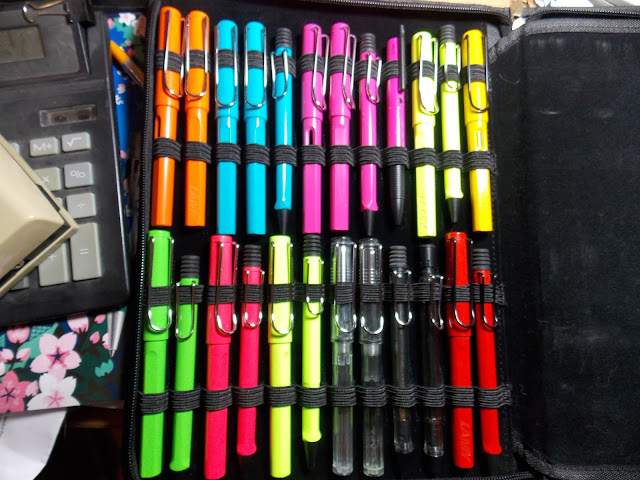
So, you’re looking at Lamy pens, huh? Maybe it’s your first fountain pen, or you’re ready to step up from a cheap disposable. You’ve probably seen a million reviews, heard about the Safari, the Al-Star, maybe even the legendary Lamy 2000. It’s overwhelming. I’ve been there. For over a decade now, Lamy pens have been a constant on my desk, in my bag, even rattling around in my car. I’ve bought, sold, traded, and broken enough of them to have some strong opinions. And here’s what I want you to know: don’t just buy the most popular one. Buy the right one.
Thinking of Your First Lamy? Don’t Make My Mistakes.
My first Lamy was a Safari, black, F nib. Everyone said it was the best starter. And it’s fine, but it wasn’t perfect for me. I learned a few things the hard way that I wish someone had told me up front.
The Safari Trap: Why Beginners Often Overlook Alternatives
Beginners flock to the Safari because it’s cheap (around $25-$30), durable, and widely available. And yes, it’s a workhorse. But its triangular grip section? That’s a deal-breaker for some. If you don’t hold your pen exactly “right,” it can be uncomfortable, even painful, after a long writing session. I eventually learned to adapt, but it took conscious effort. I wish someone had told me to try holding it first, or consider the Al-Star’s smoother grip. It’s a classic for a reason, but it’s not a universal fit. Don’t just assume it will work for you.
Ink Matters More Than You Think: My Early Bottled Ink Woes
My early days were filled with Lamy’s proprietary ink cartridges. Convenient, sure, but expensive in the long run and limited in color. When I finally bought a bottle of Diamine ink (around $15-$20 for 80ml), it was a revelation. Smoother flow, richer colors, and suddenly my Safari felt like a totally different pen. Don’t fall for the cartridge convenience trap for too long. Get a Z28 converter ($7-$10) early on. You’ll save money and open up a world of ink choices. I spent too many months thinking Lamy ink was “just okay” before realizing the problem wasn’t the pen, it was the limited ink supply.
Nib Choices: Fine vs. Medium and When to Ignore the Hype
Most Lamy pens come with either a Fine (F) or Medium (M) nib. I started with F, assuming it would be best for small handwriting. It was… okay. But after trying a Medium, I found it significantly smoother, especially on cheaper paper. The internet often pushes Fine nibs for “precision,” but if you’re writing on standard notebook paper or just enjoying the act of writing, a Medium can offer a much more pleasurable experience. Don’t just pick F because everyone says so. If your handwriting isn’t tiny, seriously consider a Medium. And if you like a really juicy line, the Broad (B) nibs are fantastic.
Safari vs. Al-Star: The Real Differences Under the Hood
This is the comparison everyone asks about. “Should I spend the extra ten bucks on an Al-Star?” The short answer: usually, yes. But let’s get into the specifics. Here’s a quick rundown of the key differences.
| Feature | Lamy Safari | Lamy Al-Star |
|---|---|---|
| Body Material | ABS Plastic (durable, lightweight) | Anodized Aluminum (lightweight, premium feel) |
| Price (Est. 2026) | $25 – $30 | $35 – $45 |
| Weight (Capped) | 17g | 22g |
| Grip Section | Triangular, transparent | Triangular, transparent |
| Durability/Scratch Resist. | Good, but plastic can show wear over time | Excellent, aluminum resists minor scratches better |
| Color Options | Wide, often includes limited editions | Wide, often includes limited editions (metallic sheen) |
Material & Feel: Plastic vs. Aluminum Durability
The biggest difference is obvious: plastic vs. metal. The Safari’s ABS plastic is tough, no doubt. I’ve dropped mine countless times, and they’ve survived. But the Lamy Al-Star, with its anodized aluminum body, just feels better in the hand. It has a cooler touch, a slight metallic sheen, and a perceived durability that the Safari just can’t match. It resists minor desk dings and pocket scratches much better. If you’re carrying your pen daily, the Al-Star holds up visually for longer.
Price Point & Value: Is the Al-Star Worth the Extra Cash?
At around $10-$15 more than a Safari, the Al-Star is absolutely worth it. That small price bump gets you a noticeably more premium writing instrument. The added weight (around 5g more) gives it a bit more presence without being heavy, and the metal body feels more substantial. It’s a better value proposition for a pen you’ll likely use for years.
Weight and Balance for Long Writing Sessions
While both pens share the same grip section, the Al-Star’s extra weight contributes to a different balance. I find the Al-Star slightly better balanced for longer writing sessions, especially if you write posted (cap on the back). The Safari can feel a little too light and top-heavy when posted, making your hand work harder. For quick notes, it’s negligible. For an hour of journaling, the Al-Star is my pick.
The Lamy 2000: An Investment, Not Just an Upgrade
Forget everything you know about Lamy up to this point. The Lamy 2000 is not just a different pen; it’s a different philosophy. If you’re serious about fountain pens and ready to commit, this is the one. Don’t even think about buying any other Lamy if you’re eventually eyeing the 2000. Save your money. It’s currently priced around $180-$220, depending on the retailer and any sales. Yes, that’s a lot for a pen. But it’s an investment that pays off every time you pick it up.
Makrolon, Piston Filler, and the Iconic Design
The Lamy 2000, designed by Gerd A. Müller in 1966, is a modernist masterpiece. Its body is made of Makrolon, a fiberglass-reinforced polycarbonate that’s incredibly tough, warm to the touch, and gives the pen a unique, matte texture. It’s practically indestructible. The real gem, though, is the piston filling mechanism. No cartridges, no converters needed. You dip the nib directly into an ink bottle and twist, filling the pen with a massive amount of ink (about 1.35ml). This means fewer refills and a more satisfying, tactile experience. The hooded 14k gold nib is nearly invisible, contributing to its sleek, minimalist aesthetic. It’s subtle, understated, and screams quality without shouting.
The “Sweet Spot” Nib: Why It’s Both Loved and Feared
Now, about that nib. It’s gold, it’s smooth, and it writes like a dream if you hit the sweet spot. Because it’s hooded, the tipping material is slightly angled, meaning it prefers a particular writing angle. If you rotate the pen even slightly, it can feel dry or even scratchy. This is the single most common complaint about the Lamy 2000. But once you find that sweet spot, it’s one of the best writing experiences out there. My Fine nib 2000 glides across paper, laying down a consistent, wet line. It forces good penmanship, almost. Don’t buy a Lamy 2000 sight unseen if you’re particular about nib feel. Try one if you can.
Long-Term Maintenance and Durability
The Lamy 2000 is built to last a lifetime. The Makrolon body is incredibly resistant to scratches and damage. The piston mechanism is robust, and with proper care (flushing with water occasionally), it requires very little maintenance. I’ve had mine for seven years, and it looks almost as good as the day I bought it, despite daily use. If something does go wrong, Lamy’s customer service and repair options are generally excellent, though sending a pen for repair is always a hassle. The hidden nib means less risk of bending or damaging it compared to an exposed nib.
The Cost vs. Value Proposition: When to Buy One
This pen isn’t for everyone, especially if you’re not sure about fountain pens. But if you’ve used a Safari or Al-Star for a while, know you love the hobby, and want a pen that feels like a true extension of your hand, the Lamy 2000 is it. It’s the end-game pen for many, and for good reason. It holds its value well, too. It’s a pen that will serve you faithfully for decades, making the initial investment seem quite reasonable in the long run.
My Essential Lamy Accessories (And What to Skip)
You’ve got your Lamy pen, but the journey doesn’t end there. There are a few essential accessories I recommend wholeheartedly, and others you can safely ignore.
The Converter: A Non-Negotiable Purchase
This is probably the most important accessory you can buy for any cartridge/converter Lamy pen (Safari, Al-Star, Studio, etc.). Lamy’s Z28 converter (often incorrectly called Z27 or Z26, but the Z28 is the latest standard, retailing for around $7-$10) allows you to use bottled ink instead of proprietary cartridges. As I mentioned earlier, this opens up a universe of color, saves money, and is better for the environment. You’ll get a smoother writing experience with good bottled ink, too. Don’t delay on this one.
Lamy Ink Bottles: The Good, The Bad, and The Dry
Lamy’s own T51/T52 bottled inks (around $12-$15 for 50ml) are… okay. They come in a smart bottle with a roll of blotting paper around the base, which is genuinely useful. But the inks themselves can be on the drier side compared to brands like Diamine or Pilot Iroshizuku. For everyday use, they’re perfectly fine, especially the black and blue-black. However, if you want vibrant colors or a really wet, lubricating flow, look elsewhere. I use their Black and Blue for utility, but my fun inks are always from other brands. Skip their colored cartridges; they’re too expensive for what they offer.
Nibs: Easy Swaps for Experimentation
One of the best features of the Safari/Al-Star line is the easily swappable Z50 steel nibs. A replacement nib (F, M, B, LH, 1.1mm, 1.5mm, etc.) costs around $12-$18. This is huge. If you bought a Fine and hate it, you don’t need a new pen. Just pull off the old nib (use a piece of tape for grip, pull straight off) and slide on a new one. It takes seconds. This is how I discovered my preference for Medium nibs and occasionally enjoy a 1.1mm stub for creative writing. Don’t be afraid to experiment with nib sizes; it totally changes the pen’s character.
Why Your Lamy Might Be Skipping (Troubleshooting Q&A)
It happens to the best of us. Your beloved Lamy, usually so reliable, suddenly decides to stop writing or gives you a scratchy line. Don’t panic. Most common issues are easy fixes.
“My Pen Won’t Start. Is it Dry?”
Not necessarily. If it’s been sitting for a while, the ink in the feed might have dried. The simplest fix: dip the nib (just the metal part) in a small glass of clean water for a minute. Then wipe gently and try writing. If that doesn’t work, try a more thorough flush: fill the converter with water, push it out, repeat until the water runs clear. This clears any dried ink from the feed channels. Sometimes, the cartridge or converter isn’t seated properly, creating an air gap. Push it firmly into place.
“The Ink Flow is Inconsistent. What Gives?”
This is often an air bubble in the cartridge or converter, especially with new fills. Gently tap the pen nib-down on a soft surface a few times to encourage the ink to flow down. If you’re using bottled ink, make sure the converter is completely full – partial fills can sometimes cause issues. Another culprit can be “baby’s bottom,” a common nib issue where the tines are too rounded at the tip, preventing a good ink flow. This is rare on Lamy pens out of the box but can happen with wear. A quick solution is to write on a slightly abrasive surface (like an unused nail buffer, very gently!) to re-shape the tipping, but be cautious with this.
“Why is My Nib Scratchy?”
First, check for paper fibers. Sometimes a tiny fiber gets caught between the tines. A quick wipe with a soft cloth or a gentle push with a brass shim can dislodge it. Second, check your writing angle. If you’re using a Lamy 2000, remember that sweet spot. For Safari/Al-Star, ensure the nib is aligned – sometimes a slight rotation of the nib unit (which is friction fit) can make a difference. If the scratchiness is consistent, it might be misaligned tines. Hold the nib up to a light and look for any gaps or overlaps between the two metal prongs. If they’re misaligned, very gently push them back into alignment. If you’re unsure, don’t force it; a reputable pen repair shop can fix this.
The Unsung Hero: Lamy’s Z50 Nib System
This is the true genius of Lamy’s entry-level pens. That easily removable, interchangeable Z50 nib? It’s brilliant. It means you’re not locked into a single writing experience for the life of your pen. It makes Lamy pens incredibly versatile, a true educational tool for understanding different line widths and writing styles without buying a whole new pen body. This modularity democratizes nib experimentation in a way few other brands manage.
My Absolute Lamy Recommendation for 2026
So, after all these years, if you ask me, “Which Lamy should I buy right now?” my answer is precise and unwavering.
The Best Lamy for Students and Everyday Carry
Without a doubt, the Lamy Al-Star with a Medium (M) nib. Buy the Z28 converter with it immediately. It’s slightly more robust than the Safari, feels better in the hand, and that M nib offers a smoother, more forgiving writing experience on most papers. It’s durable enough for a backpack, stylish enough for a meeting, and affordable enough to not fret over losing it. You can pick one up for around $40. It’s the perfect blend of utility, aesthetics, and value.
The Best Lamy for Professionals and Serious Writers
If you’re ready to make a commitment, and especially if you appreciate minimalist design and engineering, the Lamy 2000 is your pen. Opt for an Extra Fine (EF) or Fine (F) nib for precise work, or a Medium (M) if you enjoy a broader, juicier line. Understand its sweet spot, cherish its Makrolon body, and enjoy a lifetime of superior writing. Expect to pay around $200. It’s the ultimate expression of Lamy’s design philosophy, and it truly is an end-game pen.
Don’t just follow the crowd; understand your own writing needs and match them to the right Lamy pen and accessories for a truly satisfying experience.