Most moving advice assumes you have two weeks. That’s a fire drill. You have two months. That changes everything.
With 60 days, you can avoid the three things that make moving miserable: paying movers double for a last-minute booking, throwing away things you actually wanted, and realizing on move-in day that the couch doesn’t fit through the door.
This checklist is built for the person who wants to spend $0 on expedited shipping and $0 on storage fees. It covers exactly what to do, when, and why — so you can move without the panic.
Week 1-2: The Decisions That Save You Money
Most people waste the first month. They think they have time. Then they’re panic-ordering boxes on Amazon Prime at 11 PM the night before the move. Don’t be that person.
Here’s what you should lock in during the first 14 days.
Book Your Moving Company or Truck
Moving companies raise prices by 30-50% for bookings made less than 3 weeks out. Get quotes now.
Call at least three companies. Ask for an in-home estimate — not a video call estimate. Movers who do video estimates routinely underestimate by 20% because they can’t see your stairs, your piano, or that heavy dresser you forgot about.
For a 2-bedroom apartment, expect to pay $800-$1,500 for local moves (under 50 miles) and $2,000-$4,000 for long-distance. If you’re renting a truck, reserve it now. U-Haul and Penske trucks book up 4-6 weeks in advance during peak season (May-September).
Decide What Stays and What Goes
This is the single biggest money-saver. Moving a 50-pound box of old textbooks costs you about $15 in mover fees. Throw them out, and you save $15 plus the space in the new place.
Walk through every room with a notepad. Mark every item as Keep, Sell, Donate, or Trash. Be brutal. If you haven’t used it in 12 months, it goes.
Common mistake: Keeping things “just in case.” That box of cables from 2015? Trash it. You can buy a replacement cable for $8. Moving it costs more.
Start a Moving Binder or Digital Folder
You need one place for: your lease, the new lease, moving company contract, change-of-address confirmation, utility transfer numbers, and your inventory list.
A physical binder works. A Google Drive folder works. But pick one system and stick to it. The people who lose their moving contract three days before the move are the same people who end up paying for “storage fees” they didn’t plan for.
Month 1: The Grind (Purging, Packing Supplies, and Paperwork)

This is the bulk of the work. Do it now, and the last two weeks are smooth. Skip it, and you’ll be packing at 2 AM while crying over a lamp you hate.
Sell or Donate Everything You’re Not Keeping
List items on Facebook Marketplace, Craigslist, or OfferUp. Price them to sell — 30-40% below what you think they’re worth. The goal is to get rid of them, not to maximize profit.
For larger items (furniture, appliances), give yourself a 2-week deadline. If it doesn’t sell by then, donate it. Goodwill and Salvation Army will pick up large items for free in most cities.
Real numbers: A used IKEA Malm dresser sells for about $40-60 on Marketplace. Moving it costs roughly $20 in mover fees. Is $20 worth the hassle? Probably not. Donate it and buy a new one.
Gather Packing Supplies
Don’t buy boxes from U-Haul at $2.50 each. You’ll need 30-50 boxes for a 2-bedroom. That’s $75-$125 just for cardboard.
Instead:
- Ask grocery stores and liquor stores for free boxes. Liquor boxes are small and sturdy — perfect for books and dishes.
- Check Facebook Marketplace for “moving boxes free.” People give them away constantly.
- Buy 3 heavy-duty moving bins from The Container Store ($12.99 each) for fragile items. They stack and last through multiple moves.
You also need: packing tape (buy 4 rolls — you’ll use more than you think), bubble wrap (the 175-foot roll from Amazon Basics for $18 is the best deal), and permanent markers (buy 3, because you’ll lose two).
Handle All Paperwork
Two months out is the perfect time to deal with the boring stuff. Future you will be grateful.
- Change of address: Do this online at USPS.com. It costs $1.10. Do it 4-6 weeks before the move to ensure mail forwarding starts on time.
- Transfer utilities: Call your current provider and schedule the shut-off for the day after you move. Call the new provider and schedule the start for the day you arrive. Do this now — appointment slots fill up.
- Update your driver’s license and car registration: Check your state’s DMV website. Some states require you to update your license within 30 days of moving. The fine for forgetting can be $100+.
- Notify your bank, insurance company, and employer. Do it all in one sitting. It takes 20 minutes.
| Task | When to Do It | Time Needed | Cost |
|---|---|---|---|
| Book moving company or truck | Week 1-2 | 2 hours (calls + research) | $0 (booking fee later) |
| Sort all belongings (Keep/Sell/Donate/Trash) | Week 1-3 | 4-6 hours | $0 |
| Sell/donate unwanted items | Week 2-4 | 3-5 hours | $0 (or profit) |
| Gather packing supplies | Week 3-4 | 1-2 hours | $20-$50 |
| Change of address (USPS) | Week 4 | 10 minutes | $1.10 |
| Transfer utilities | Week 4 | 30 minutes | $0 |
| Update DMV/bank/insurance | Week 4 | 20 minutes | $0 (fees later) |
Month 2: Packing, Cleaning, and the Final Countdown
You have 30 days left. You should already have your moving company booked, your belongings sorted, and your paperwork done. If not, stop reading and do that now.
Pack Room by Room, Starting With What You Use Least
Start with the guest room, the storage closet, and the garage. Pack these completely. Seal the boxes with two strips of tape — one across the top flaps, one across the bottom. Label every box with the room name and a brief contents list.
Labeling system that works: Write the room name in large letters on two sides of the box. Then write “FRAGILE” in red if it contains glass or electronics. This saves the movers (or you) from guessing.
Pack kitchen items last. You need your coffee maker and your frying pan until the day before the move. Leave those for the final week.
The “Essentials Box” — Don’t Skip This
Pack one box (or a suitcase) with everything you need for the first 48 hours in the new place. Label it “OPEN FIRST.”
Contents:
- Toilet paper (2 rolls)
- Paper plates, cups, plastic utensils
- One set of sheets and a pillow
- Phone charger and a power strip
- Basic toiletries (toothbrush, soap, towel)
- A change of clothes
- Snacks and water bottles
- Pain reliever (you will have a headache)
This box travels with you in your car, not on the moving truck. Trust me — you do not want to dig through 40 boxes at midnight looking for your toothbrush.
Deep Clean Your Old Place
Most leases require you to leave the apartment “broom clean.” That usually means swept floors, wiped counters, and empty fridge. But to get your full security deposit back, you need to do more.
Clean the oven. Wipe inside the cabinets. Vacuum under the refrigerator. Scrub the bathroom grout. Landlords will deduct $50-$200 for each of these if they have to do it themselves.
If you’re not up for it, hire a professional cleaning service. In most cities, a deep clean for a 2-bedroom costs $150-$250. Compare that to losing a $500 security deposit.
Failure Modes: What Goes Wrong When You Rush

You have two months. You don’t have to make these mistakes. But knowing what they are helps you avoid them.
Mistake 1: Not Measuring Doorways and Hallways
Your couch is 84 inches long. Your new apartment’s front door is 30 inches wide. The math doesn’t work. But you won’t realize this until the movers are standing there with the couch halfway through the door, stuck.
Measure the doorways, hallways, and stairwells at your new place. Measure your largest furniture pieces. If something won’t fit, sell it now and buy a smaller version later.
Mistake 2: Packing Heavy Items in Large Boxes
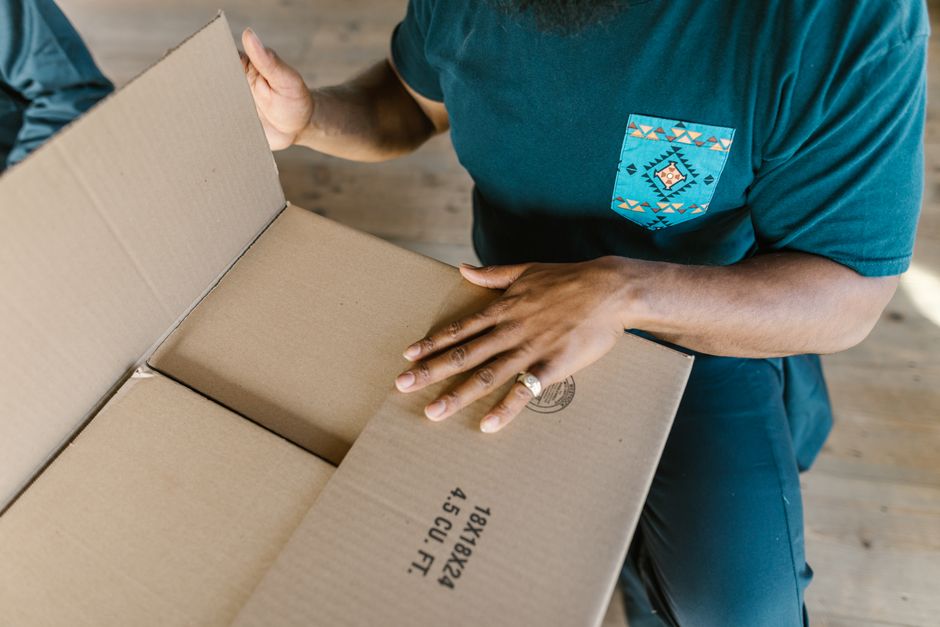
A large box (18x18x24 inches) filled with books weighs about 50 pounds. That’s too heavy for one person to carry comfortably. Use small boxes for books and heavy items. Use large boxes for lightweight stuff like pillows and linens.
Rule of thumb: If you can’t lift the box with one hand, it’s too heavy. Repack it.
Mistake 3: Forgetting to Transfer Your Internet
Setting up internet at a new address takes 5-10 business days in most areas. If you schedule it the day you arrive, you’ll be without internet for a week. Do it 3 weeks before the move.
Call your provider now. Schedule the install for the day after you move in. It takes 10 minutes on the phone and saves you a week of frustration.
When You Should Ignore This Checklist (And Do Something Else)
This checklist works for 90% of moves. But there are situations where you need a different approach.
If you’re moving for a job that starts in 3 weeks: You don’t have 2 months. Hire full-service movers who pack everything for you. It costs more (add $500-$1,000), but it’s the only way to make the deadline without losing your mind.
If you’re moving into a furnished apartment: You don’t need to move furniture. That changes everything. Your checklist shrinks to: clothes, kitchen items, electronics, and personal documents. You can do this in 2 weeks, not 2 months.
If you’re moving across the country: Ship your car ($800-$1,200 for open transport) and fly. Driving a U-Haul 2,000 miles costs more in gas, food, and hotels than you’ll save. Plus, you get there in 6 hours instead of 4 days.
If you’re moving in with a partner: You’ll have duplicate items. Two toasters. Two sets of pots. Two couches. Before you pack anything, sit down together and decide which items stay and which go. This conversation is easier now than it will be when you’re both tired and hungry on move-in day.